A masterclass in adventure design, Caves of Qud delivers an unforgettable experience from start to finish.
95
Verdict
95%
Steam
94
IGDB
Verdict score based on confidence-adjusted Steam reviews?
Overwhelmingly Positive on Steam (95% positive from 12K reviews)
Critically acclaimed (94/100 critic average)
Compelling narrative and story
Rich open world to explore
Steep difficulty curve may not appeal to casual players
Still in Early Access — content may be incomplete
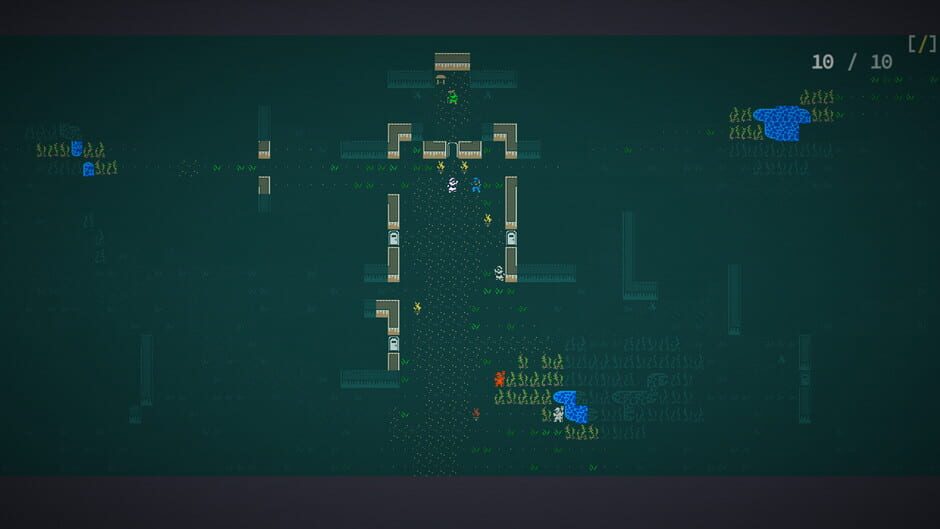
Caves of Qud is a roguelike role-playing video game developed by American studio Freehold Games set in an open world that is partially pre-made and partially procedurally generated. The game takes place in a post-apocalyptic science fantasy setting and is inspired by the pen-and-paper role-playing games Gamma World and Dungeons & Dragons.
Runs well on modern hardware.
Last updated 13h ago
Calling Caves of Qud one of the greatest games ever made might sound like a little too much - I don't know that I agree that this is one of the greatest games ever made. The game explains very little as it thrusts you into a world where you'll have to start over right from the beginning if you so much as step on the wrong tile (if you play classic mode). It throws absurd difficulty spikes at you. The game populates its settlements and cities with dozens, if not hundreds of NPCs, ~90% of which are generic and practically useless. The game expects you to dungeon crawl randomly for content, leaving you to spend hours grinding annoying weak mobs in repetitive, often uninsteresting settings. In circumstances such as these, the game can feel [strike]boring[/strike] somewhat light at a cognitive level. Every intricate dynamic system in the game [i]can[/i] connect to another in some way, and yet I always feel like all of it is only there for me to game (simulation in tiles only actually happens when your character's present). The reputation system feels simplistic and incomplete. Some other nitpicks don't make sense to include here. Now, I do understand where the game gets its accolades from. You see, Caves of Qud has quite possibly the best original worldbuilding in the history of video games. It's so alien, so unique, and so intricate that every writer should look to it for inspiration. The gameplay is emergent in nature and every new seed is a unique adventure waiting for you. When the simulation aspect of the game comes in, it comes in strong and unlike anything I've ever experienced. The soundtrack is a perfect blend of experimental and soothing, right in line with the world of Qud. What I have seen of the narrative so far, I have also loved. The items and their descriptions, the perks, the status conditions, the scope of it all is immense. What there is in this game that's handcrafted (anything that isn't procedurally generated) is a masterpiece. There's so much care in creating this punishing, challenging experience that makes you want to come back for more, and you just do. You come back again and again, each time knowing a little more than you did before, trying out new builds or sticking to your [i]winning formula[/i] only to find that irregardless, you will keep dying - to stronger opponents, to an electric shock, to a distraction, to your hubris, and pretty much anything else. At the end of the day, if you can soldier the loss of a particularly strong run due to "violating the Pauli exclusion principle", getting an equally strong run going will feel so rewarding. More than accustomed, you grow entwined with Qud. The idiosyncratic and postbiological lifeforms, the repurposing of the natural laws of the world we know to convey a distant, quasi-dystopian future in Qud. The lore on religions and cultures that cements their place in the world as if they had all truly occurred and left tangible marks in the world and the living peoples of Qud. It's absolutely no wonder Brian and Jason of Freehold Games get work as consultants for AAA studios. Caves of Qud [b]may[/b] not be one of the greatest games ever made. Considering how many people wouldn't even give a game that looks like this a chance, the jury's still out on that one. And I also don't believe this game is for everyone, but that's practically self-evident. However, to me, Caves of Qud is the perfect amount of odd and punishing, it offers gargantuan gameplay depth and the single best worldbuilding of any game I've ever played. Regardless of what makes it rough around the edges, what Caves of Qud is to me is one of my favorite games of all time. Thank you, Freehold Games, for creating Caves of Qud. And for the inspiration.
Play this game if you love deep simulation RPGs, strategy, exploration, high-fantasy sci-fi, hallucinogenic mushrooms, breaking the laws of physics, growing 20 limbs, looking into every possible future to figure out how to make the perfect meal, seducing a extra-dimensional tentacled being so you don't die deep underground, mistakenly making so many copies of yourself it fills every tile on the map, phasing in and out of reality, and figuring out how to save Qud aurafarming as much as possible. What I like to call, "the perfect game," only one other game has that title from me and it's this publisher's (Kitfox Games, made by Bay 12 games), Dwarf Fortress.
I hope this art style works for you because there is a really good game underneath.
Reviews sourced from Steam. All reviews belong to their respective authors.
Data sourced from RAWG, Steam, IGDB, CheapShark, Wikipedia, HLTB, and GX Corner. Sources: rawg, steam, cheapshark, igdb, wikipedia.
All game titles, trademarks, and copyrights belong to their respective owners.
