A masterclass in strategy design, Dicefolk delivers an unforgettable experience from start to finish.
91
Verdict
90%
Steam
95
IGDB
Verdict score based on confidence-adjusted Steam reviews?
Very Positive on Steam (90% positive from 990 reviews)
Critically acclaimed (95/100 critic average)
No significant drawbacks reported
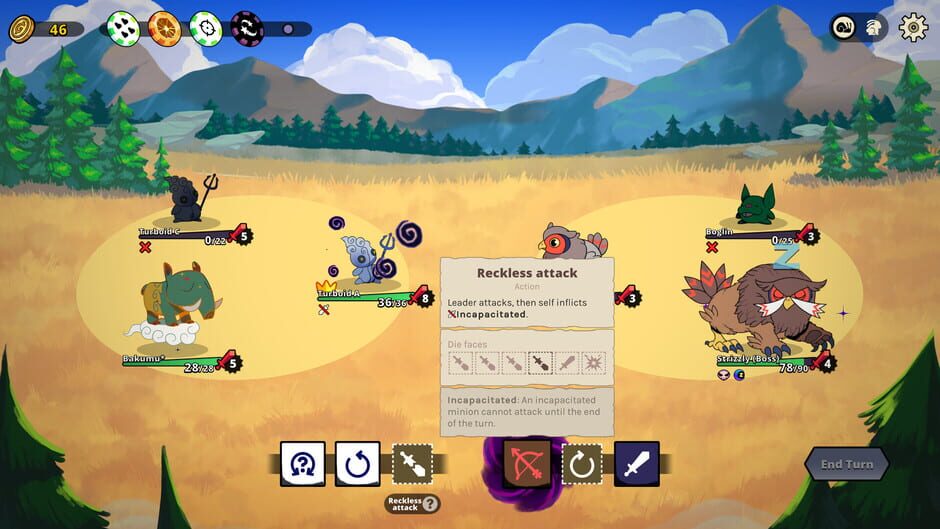
Wield magical dice and build a team of powerful Chimeras to stop a mysterious evil in this tactical roguelite adventure. As a Chimera Summoner, recruit and create your perfect team of mythical beasts and command them to victory using unique dice mechanics.
Runs well on modern hardware.
Last updated 5d ago
It's a good beginner roguelite with the neat unique mechanic of controlling the AI's moves and order. A very creative game design that works fairly well. Uses a binding of issac map system. I think 15 is a bit steep for this game, somewhere around 7-9 is better.
NOT RECOMMENDED - pure RNG slop that is only tolerable with heavy RNG manipulation and save-scumming and even then it feels extremely mid and half-baked. Tl;dr - the main game mechanic of "controlling both sides of the field" means you are essentially playing chess with you controlling both sides. The gameplay variety is limited to the random dice pulls that are this game's cards. It is as "dicey" as it sounds. It is laborous and feels like jobbing. Not good IMHO. The moment someone mentioned that the game looked like "playing chess against yourself", the premise should have been pulled, scrapped and completely re-designed. They try to alleviate it by adding triggers and the usual +ATTACK shenanigans, though it just makes it look worse because the core gameplay is not appealing in the slightest. It is the usual "accountant minigame" bean-counter stuff that is great for bots and awfully dull to humans. It is barely more than simply maxing out damage numbers to the point it is annoying math micromanagement that would be better off with an auto-battler (or a botted) implementation where the computer calculates that stuff so that you can focus on getting the resources. What a fun first playthrough where despite going through everything and stacking all of the possible items and effects, the first world boss is simply more powerful than your whole team combined and spawns three "Random" attacks on the first turn, instantly almost killing one of your dudes while you get nothing despite all of the best efforts. Also the gains from losing are laughably slow unlocks of seemingly useless extra creatures. The crux of why the gameplay does not work is simple: it is a roguelite (read: practically no healing allowed) that one-sidedly wears you out with its repeated, almost cloned, enemy encounters like a dozen times even before the Boss gets to crush your dreams. It is a mind-rendingly boring and frustrating adventure. On top of that, you are not shown any explicit incentive to beating the game - no story or characterization whatsoever. If I have to stretch my imagination for a game in 2026 that is not a hardware-limited Atari 2600 game, you have lost me. Why on Earth would I pick this game out of thousands other options only for it to put in no effort to keep my interest and instead drain my limited mental fortitude and time with its carbon-copy, repeated encounter nonsense. Play this game if you want to feel super bored. The credits roll shows a lot of people. It is hard to believe so many people managed to create such a weak product with such a raw implementation. I paid like 20 cents for the game key. No wonder it was that cheap. It is about as deep as a puddle. It needed much more content to qualify for the dollar-menu tier.
pretty solid game, good depth and build variety, you can do some crazy combos, good amount of endgame content, great soundtrack, very underrated
Reviews sourced from Steam. All reviews belong to their respective authors.
Data sourced from RAWG, Steam, IGDB, CheapShark, Wikipedia, HLTB, and GX Corner. Sources: rawg, steam, cheapshark, igdb.
All game titles, trademarks, and copyrights belong to their respective owners.
