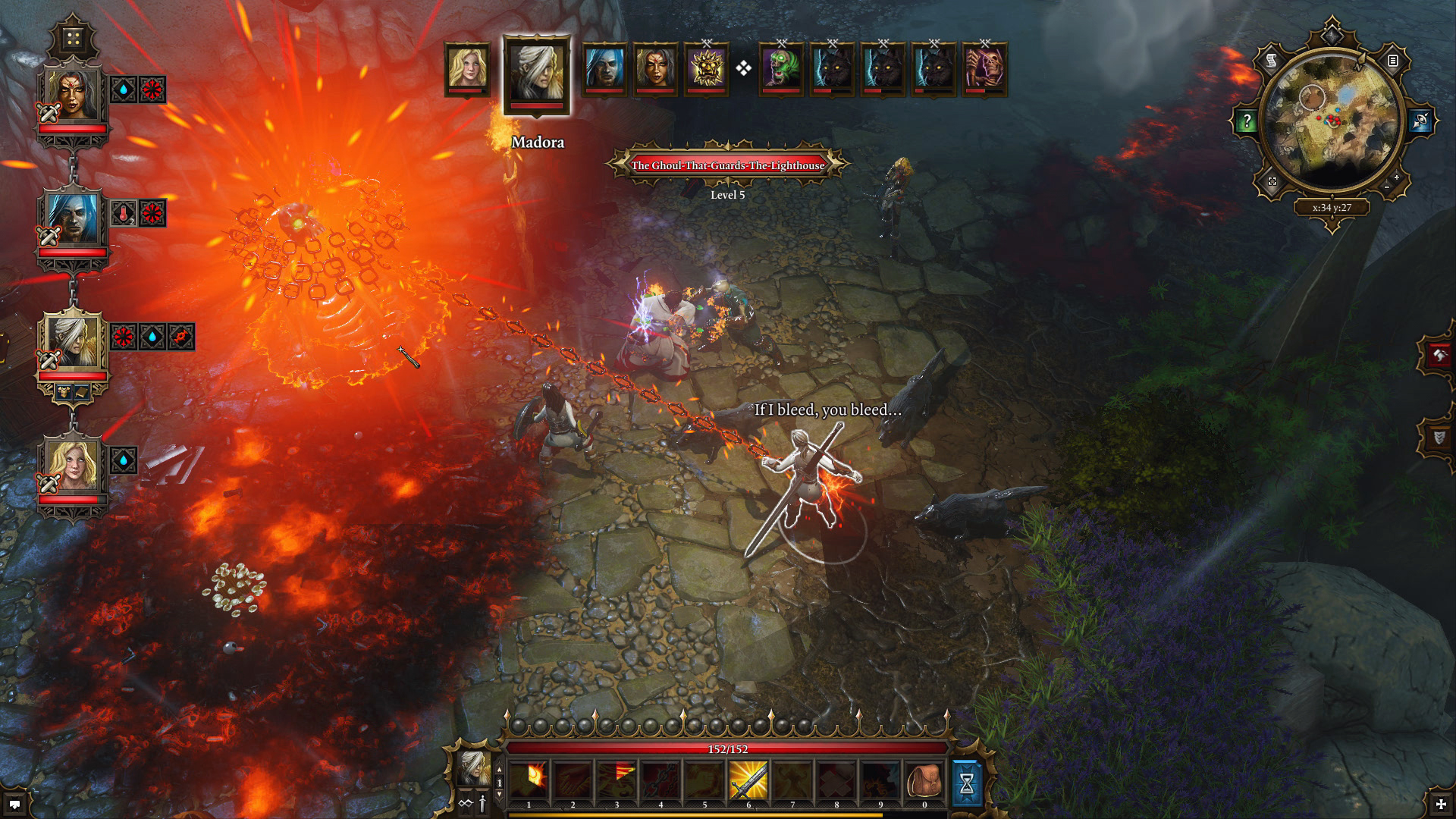
Divinity: Original Sin - Enhanced Edition is an exceptional RPG/Indie that raises the bar for the genre.
91
Verdict
89%
Steam
—
IGDB
Verdict score based on confidence-adjusted Steam reviews?
Very Positive Steam reviews (89% positive)
Healthy player count of 981 concurrent
Compelling narrative and story
Rich open world to explore
No significant drawbacks reported
Divinity: Original Sin is a role-playing video game developed and published by Larian Studios. The fourth main entry in the Divinity game series, it is a prequel to the original game Divine Divinity, and to the other main games in the series. It was first released on Microsoft Windows on 30 June 2014.

Runs well on modern hardware.
Last updated 2d ago
I really wanted to love this game, I have to admit anyone jumping into this after playing Larians other games (Baldur's Gate 3, Divinity 2) was spoiled with those releases, Divinity Original Sin 1 does not hold your hand, ever, nor would I consider it beginner friendly. which is fine but felt tedious at times. There is some funny humor, nice stories and environmental elements that are fun to interact with, but I struggled to connect with the companions (Specifically Bairdottr, her storyline is NOT rewarding or nice to see come to a close) and the story itself- whereas it felt more compelling and immersive in Divinity Original Sin 2. There's also a specific bug I encountered with grenades, throw 'em one way and they'll land on the opposite site, it happened from literally start to finish. The biggest downside and the reason I write this review is the FINAL boss battle. Fighting death knights that respawn unless you kill every.single.one. in one turn was horrible enough, but the final-FINAL fight where you apparently have to keep an NPC alive was straight up awful, the NPC is weak and dies within 1 if not 2 turns and it's an immediate game over each time, your party of 4 has to go up against 15 NPC + the strongest boss AND somehow save the NPC that's the priority for all of said enemies. I may have been unprepared or didn't follow the meta, but I tried for hours and in the end left this unfinished. Honorable mention: There is no short rest, long rest- hell there is not even a bedroll. You venture out and have to keep teleporting (or often times walk) to an Inn or bed to heal, Oh! AND YOU HAVE TO WAIT FOR EVERY PARTY MEMBER INDIVIDUALLY TO HEAL UP. (or use a spell BUT also only individually). Overall I would recommend this game to someone well versed in the divinity universe or someone up to a challenge, but for anyone looking for a good time or a experience close to BG3 or DOS2, just replay those.
I knew this would be rougher than Divinity 2 and Baldurs Gate 3, but was still excited to try it out. In the end I did like playing it, but with many minor aspects annoying me throughout the game. I never had a game where I misclicked enemies as much as this game, lol. The number of traps being blown into my face was outrageous! And I would have never finished this game without help online, especially because the Quest Log (and map) are not guiding you at all. Which is really not recommended in fantasy games like these, because I never know if it’s one of those “later comes the next part” type of quests or me missing one bit in the same location. Besides mechanics and the game itself, which ran smoothly and only bugged once or twice for me, I couldn’t get into it. From characters, some are extremely useless even if their role is supposed to be meaningful, to the companions. I almost dropped them all right at the start for some reason. I can’t pinpoint it exactly, but I never lost myself in the world completely … which is sad, because I really like those types of games and I wanted to like this game right till the end! A similar experience, but way less happened in Divinity 2. Maybe I need to watch some lore vids to dive deeper and then I enjoy the world of Divinity more … At some points I considered not giving it a thumbs up, but someone wrote in a comment that it’s like a grandfather for the other Larian games and I liked the comparison. A fine game with a better sequel and then even Baldurs Gate 3 later as one of the best games out there. It’s rough, but still fun. I played it over 100 hours and that’s a statement for the game still pulling me through. Or me being way too grindy. I would still suggest maybe looking up one or two things before playing, because the game feels very unbalanced. But it has voice acting everywhere, even the animals, and that alone is amazing. Talking to animals was my favorite part btw. A cautious recommended!
Get ready for terribly inefficient and overly complicated 90's-era inventory management, long winded rants by NPCs (what does it say about the amount of hours play-testing this game when the characters in the very first town you end in continuously spout their lines until it drives the player nuts?), a lot of backtracking with only vague clues to go on and no undo last-step button in sight. The latter is unfortunate because you'll be misclicking a lot in this game: sometimes the cursor just doesn't 'snap' on and bam, there you go: you accidentally robbed someone and pissed off the town! At least outside of combat ,you can always load a save game and hopefully it'll be right before you misclicked but during a fight, it's just a painful thing to have happen to you. Especially the part where your companion slowly walks forward and you watch him waste that opportunity you sorely needed, The companions-with-opinions based is sort of novel, the music is nice and the graphics aren't bad but it is just another high-fantasy with the exact same story that we've seen a hundred times over. The voice-acting is painful and does not help immersion at all, it's over the top and so are the characters and the writing, Did i forget to tell that this game just doesn't respect your time; healing is an absolute chore and your party members can not be easily revived. I also severely dislike the way that you set up your two main characters and bam, you run into almost identical 'companions' making you wonder if perhaps you should just re-roll and start over. I really find these class-based games outdated and time consuming. Just give us a blank slate so we can develop our characters as we play the game rather than having to wiki everything beforehand to make sure we're not shooting ourselves in the foot 10 hours from now. Not recommended, it's like Baldurs gate 2 hit the air duster.
Reviews sourced from Steam. All reviews belong to their respective authors.
Data sourced from RAWG, Steam, IGDB, CheapShark, Wikipedia, HLTB, and GX Corner. Sources: rawg, steam, cheapshark, wikipedia.
All game titles, trademarks, and copyrights belong to their respective owners.
