Fans of the action genre will find plenty to enjoy in Final Fantasy VII (1997).
89
Verdict
93%
Steam
—
IGDB
Verdict score based on confidence-adjusted Steam reviews?
Very Positive on Steam (93% positive from 30K reviews)
Compelling narrative and story
Rich open world to explore
Outstanding soundtrack
No significant drawbacks reported
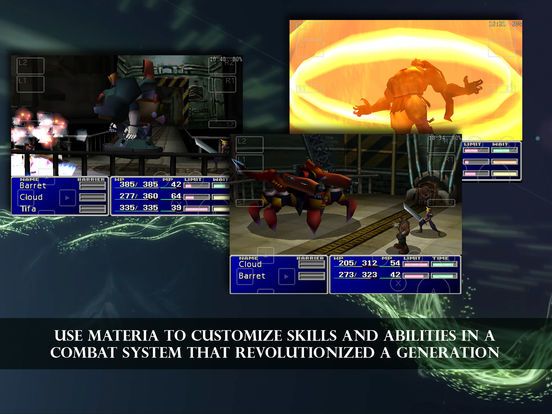
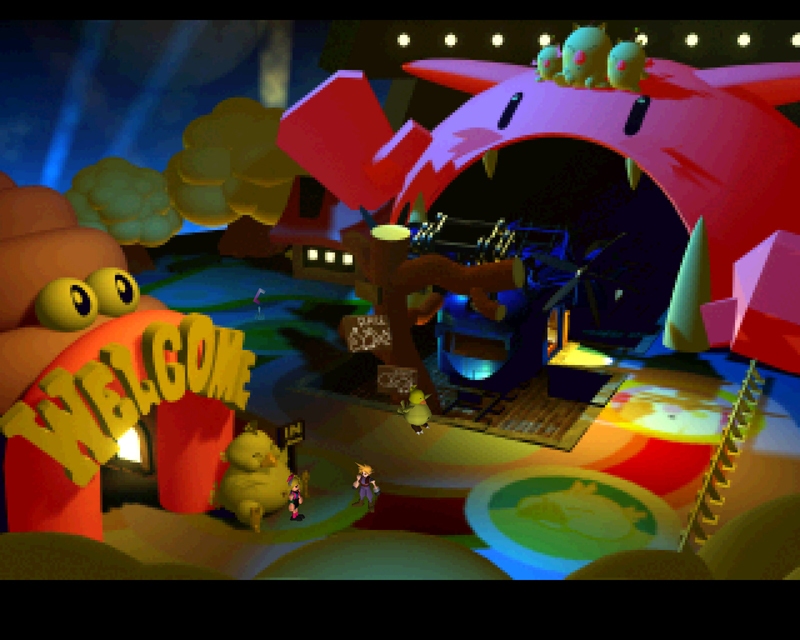
Final Fantasy VII is a Japanese role-playing game, a seventh installment in the series, excluding spin-offs. The main events take place in the world of Gaia, in the city of Midgar; the game combines standard fantasy elements with steampunk and other science fiction, providing the players with well-defined lore and locations. The main character, a mercenary named Cloud Strife, joins the cause of disrupting a megacorporation, which was destroying the planet with its excavations for energy. However, the storyline offers much more beyond that, allowing players to discover the secrets of Midgar, and eventually, save the world. Final Fantasy VII follows the trend set by previous games of the series, offering a grand world map to explore, with unique locations and lengthy battles. The combat system is a trademark for the genre and the series, where the player’s team and the enemies trade blow in a turn-based manner, employing different skills and items until either side is defeated. The game’s art style is innovative for a Final Fantasy, as it uses 3D models over 2D backgrounds, resulting in a unique and memorable art style.
Runs well on modern hardware.
Last updated 11h ago
Having played this masterpiece on the original PlayStation as a kid, replayed it on PSN, and now finally completing it on Steam, Final Fantasy VII remains an unassailable titan of the genre. You play as Cloud Strife, a mercenary-for-hire who joins the eco-terrorist group AVALANCHE to stop the corrupt Shinra Electric Power Company from draining the planet’s life force. It redefined an entire era of gaming upon release, and it completely holds up today. The Gameplay & World The Structure: The classic split between the vast world map, exploratory field maps, and active battle screens provides an amazing sense of scale. The Materia System: The skill system, attaching condensed life energy orbs for magic, summons, and abilities, is beautifully unique and deep. The Ultimate Challenges: Defeating brutal, legendary superbosses like Emerald Weapon and Ruby Weapon are still incredibly rewarding. The Good Masterful Creators: Hironobu Sakaguchi is a god of game design. Breathtaking Story: The narrative is simply amazing, deeply emotional, and full of iconic moments. Unmatched Impact: This is the exact title that popularized JRPGs globally. The Bad The PC Sound Files: The Steam release uses the inferior PC MIDI files for its soundtrack by default. Compared to the beautiful original PlayStation audio composed by the legendary Nobuo Uematsu, the audio quality sounds incredibly flat. Verdict 10/10. An essential piece of gaming history. (Note: If the audio bothers you, look up the FFNx audio mod on GitHub or Steam guides, it takes five minutes to easily restore the beautiful PS1 orchestral tracks!)
I've played eight Final Fantasy titles in total and for me FF7 is the best one by far. I first played it as a little boy on PS1 and liked it a lot. After becoming a grown man (or at least a grown manchild) and playing it more and more, my opinion has only risen. There aren't many games out there which have music that can make me feel nostalgic. There aren't many games out there which have a combat system that I think is 'COOL'. Good combat systems certainly, but not 'COOL'. The story of the game certainly has some plotholes, but FF7 has such an ENORMOUS soul that it forces me to ignore those things. That soul is so POWERFUL that it tells me the various antagonists with their stupid laughters are not cringy, but that they are villains who know they can get away with their behavior. Final Fantasy 7 has summons, that you unsurprisingly summon during battles. These summons have lenghty animations, but personally I've never viewed these animations as something that are just a waste of time. Quite uncommon in my case, since I usually get easily impatient when I think a video game is taking too long with something. As you can see, FF7 has that secret sauce that makes me overlook certain things. All great games have that special 'feeling' because I don't think any game is actually truly perfect without any flaws. FF7 is one of those games. As for other things regarding this game. I really like the companions that can join your party (some of them are optional). They all have enough background story about them and their reasons for tagging along make enough sense. Their limit breaks (special attacks) also add more uniqueness to them. Now, you'll be traveling a lot in the game and therefore come across many, many different locations. Nobuo Uematsu, the composer of the game, did an excellent job matching the locations with his music, giving them the right kind of mood. Battle music rocks quite well, too. The materia system that works directly with weapons, armor, magic and summons is easy to understand and I think, fun as well. It is so easy to comprehend in fact that I don't think I have to tell much about it, since even I never had any trouble understanding it. Weapons and armor have materia slots in them. Magic and summons come in the form of materia orbs. You simply place these orbs in to the slots. What else there is to say? Final Fantasy 7 is a grand adventure that is sometimes goofy, sometimes serious. It has its light hearted moments and it has its dark moments. I think the game handles these mood shifts in a good way. I'll admit there is that nostalgia factor at play here, but I could start playing FF7 right now and enjoy the hell out of it once again.
I can see why final fantasy vii fans act like this. I don't blame them, I am infact joining them.
Reviews sourced from Steam. All reviews belong to their respective authors.
Data sourced from RAWG, Steam, IGDB, CheapShark, Wikipedia, HLTB, and GX Corner. Sources: rawg, steam.
All game titles, trademarks, and copyrights belong to their respective owners.
