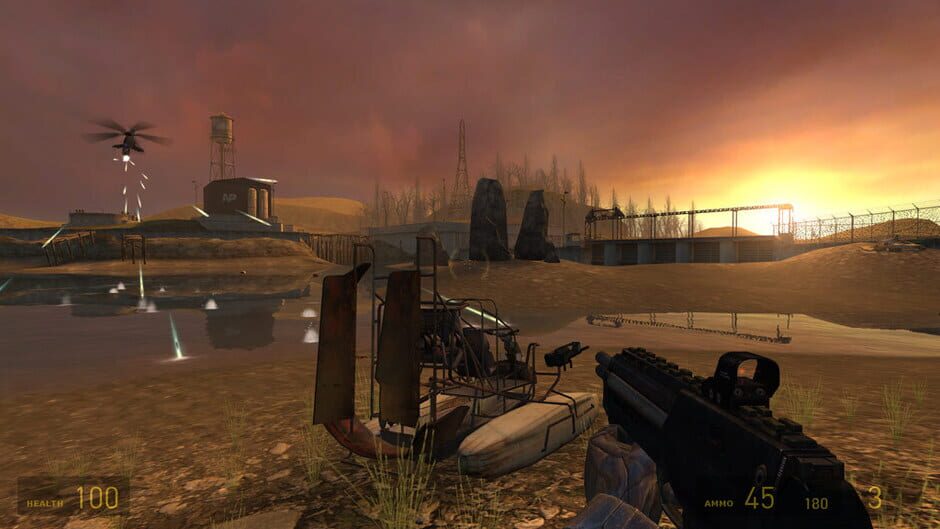
Half-Life 2 stands out as one of the best Action/Shooter titles in recent memory.
95
Verdict
98%
Steam
79
IGDB
Verdict score based on confidence-adjusted Steam reviews?
Overwhelmingly Positive on Steam (98% positive from 268K reviews)
Healthy player count of 1,221 concurrent
Compelling narrative and story
Engaging multiplayer/co-op experience
No significant drawbacks reported
Half-Life 2 is a 2004 first-person shooter game developed and published by Valve Corporation. It was published for Windows on Valve's digital distribution service, Steam. Like the original Half-Life (1998), Half-Life 2 is played from a first-person perspective, combining combat, puzzles, and storytelling. It adds features such as vehicles and physics-based gameplay. The player controls Gordon Freeman, who joins a resistance effort to liberate Earth from the alien Combine empire.
Runs well on modern hardware.
Last updated 23h ago
---{ Graphics }--- ☐ You forget what reality is ☐ Beautiful ☑ Good ☐ Decent ☐ Bad ☐ Don‘t look too long at it ☐ MS-DOS ---{ Gameplay }--- ☑ Very good ☐ Good ☐ It's just gameplay ☐ Mehh ☐ Watch paint dry instead ☐ Just don't ---{ Audio }--- ☐ Eargasm ☑ Very good ☐ Good ☐ Not too bad ☐ Bad ☐ I'm now deaf ---{ Audience }--- ☑ Kids ☑ Teens ☑ Adults ☑ Grandma ---{ PC Requirements }--- ☐ Check if you can run paint ☑ Potato ☐ Decent ☐ Fast ☐ Rich boi ☐ Ask NASA if they have a spare computer ---{ Game Size }--- ☐ Floppy Disk ☑ Old Fashioned ☐ Workable ☐ Big ☐ Will eat 15% of your 1TB hard drive ☐ You will want an entire hard drive to hold it ☐ You will need to invest in a black hole to hold all the data ---{ Difficulty }--- ☐ Just press 'W' ☐ Easy ☑ Easy to learn / Hard to master ☐ Significant brain usage ☐ Difficult ☐ Dark Souls ---{ Grind }--- ☑ Nothing to grind ☐ Only if u care about leaderboards/ranks ☐ Isn't necessary to progress ☐ Average grind level ☐ Too much grind ☐ You'll need a second life for grinding ---{ Story }--- ☐ No Story ☐ Some lore ☐ Average ☐ Good ☐ Lovely ☑ It'll replace your life ---{ Game Time }--- ☐ Long enough for a cup of coffee ☐ Short ☐ Average ☑ Long ☐ To infinity and beyond ---{ Price }--- ☐ It's free! ☑ Worth the price ☐ If it's on sale ☐ If u have some spare money left ☐ Not recommended ☐ You could also just burn your money ---{ Bugs }--- ☐ Never heard of ☑ Minor bugs ☐ Can get annoying ☐ ARK: Survival Evolved ☐ The game itself is a big terrarium for bugs ---{ ? / 10 }--- ☐ 1 ☐ 2 ☐ 3 ☐ 4 ☐ 5 ☐ 6 ☐ 7 ☐ 8 ☑ 9 ☐ 10 ---{ Author }--- ☑ https://vojtastruhar.github.io/steam-review-template
I finally played and finished this landmark shooter—one I had skipped for years and its still quite enjoyable to play even in 2026. It really is an all-time classic, my personal rating for the game is 9/10. Its ironic that it took me 22 hours to fully complete the game.
Somehow this game is older than half the people playing it and still has better physics, pacing, and atmosphere than most modern shooters. Gordon Freeman wasted no words and proceeded to save the world without saying a single one.
Reviews sourced from Steam. All reviews belong to their respective authors.
Data sourced from RAWG, Steam, IGDB, CheapShark, Wikipedia, HLTB, and GX Corner. Sources: rawg, steam, cheapshark, igdb, wikipedia.
All game titles, trademarks, and copyrights belong to their respective owners.
