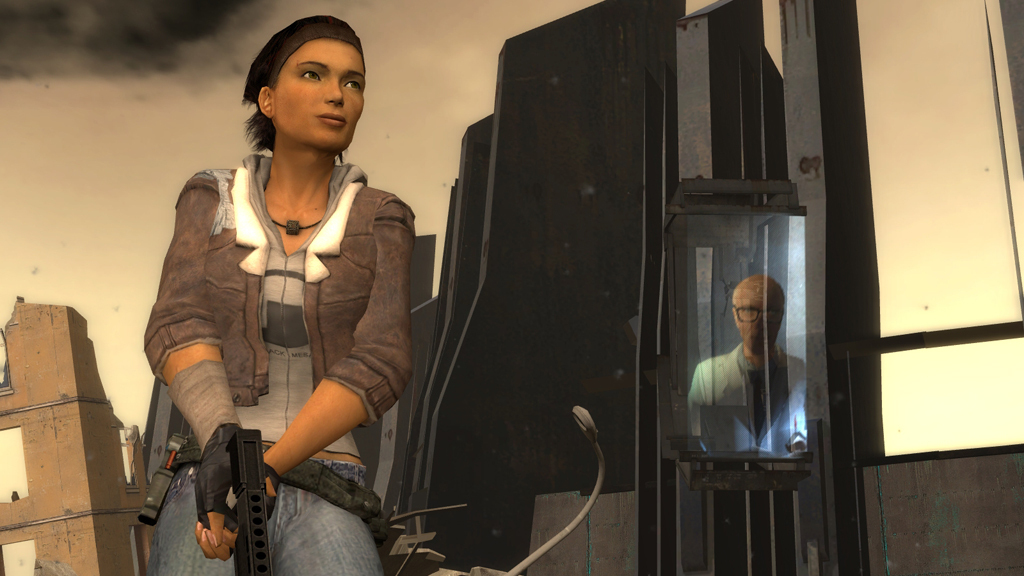
With near-perfect execution, Half-Life 2: Episode One is a must-play for any action fan.
93
Verdict
96%
Steam
—
IGDB
Verdict score based on confidence-adjusted Steam reviews?
Overwhelmingly Positive on Steam (96% positive from 31K reviews)
Compelling narrative and story
Outstanding soundtrack
No significant drawbacks reported
Half-Life 2: Episode One is a 2006 first-person shooter game developed and published by Valve for Windows. It continues the story of Half-Life 2 (2004). As the scientist Gordon Freeman, players must escape City 17 with Gordon's companion Alyx Vance. Like previous Half-Life games, Episode One combines shooting, puzzles and storytelling.
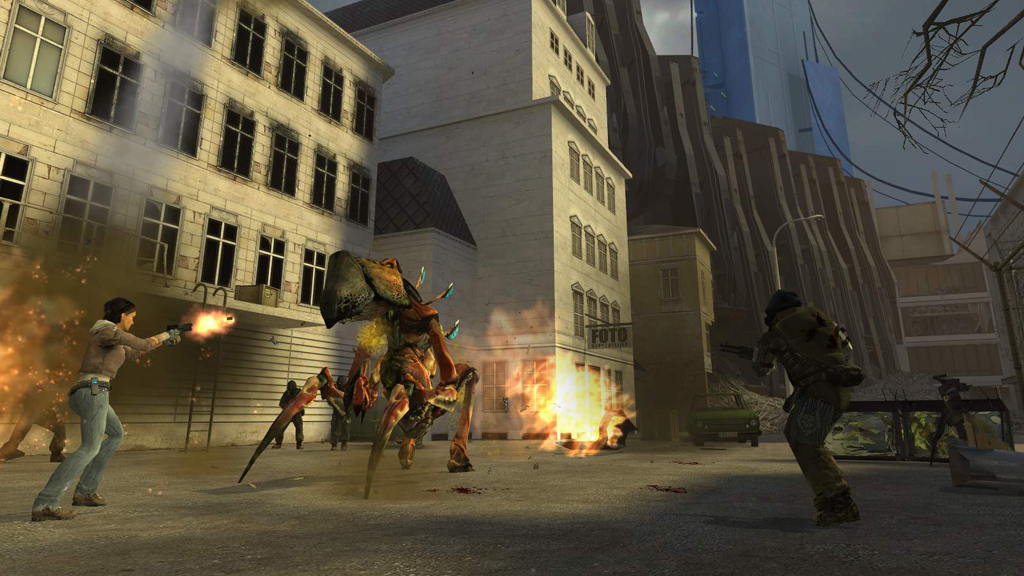
Runs well on modern hardware.
Last updated 18d ago
this is so peak, i remembered playing it yesterday, and is the best sci fi game
Half-Life 2: Episode One, developed and published by Valve, continues the story immediately after the explosive finale of Half-Life 2 and serves as the opening chapter in Valve’s episodic sequel series. Instead of introducing a completely new conflict, the game focuses on the aftermath of Gordon Freeman’s actions, placing players in a City 17 that is rapidly falling apart. The looming destruction of the Citadel creates a constant sense of urgency, turning the entire adventure into a desperate race against time. This premise gives the game a more focused narrative direction while maintaining the immersive storytelling that made the original title so influential. One of the game's greatest strengths is its ability to tell a compelling story without relying heavily on traditional cutscenes. Events unfold naturally as players move through ruined streets, abandoned buildings, and collapsing infrastructure. The world itself communicates the scale of the disaster through visual details, allowing players to witness the consequences of the resistance's victory firsthand. Rather than simply observing the story, players feel like active participants in a city struggling to survive its final hours. Alyx Vance plays a much larger role than before and becomes the emotional center of the experience. Throughout the campaign she remains by Gordon’s side, helping in combat, offering guidance, and reacting to unfolding events. Her advanced artificial intelligence was particularly impressive for its time, making her feel like a genuine companion instead of a scripted follower. Conversations between characters flow naturally, and Alyx’s presence adds warmth and personality to a story that could have otherwise felt overwhelmingly bleak. The gameplay builds upon the proven foundation established in Half-Life 2. Combat remains fast-paced and satisfying, with players facing Combine soldiers, zombies, and various alien threats while navigating dangerous environments. The Gravity Gun continues to be one of the game's most enjoyable tools, encouraging creative solutions during both combat and puzzle sequences. Episode One does not reinvent the mechanics of its predecessor, but it successfully refines them through carefully designed encounters that consistently challenge the player without becoming repetitive. The game's environments are among its most memorable features. Much of the adventure takes place within damaged sections of City 17 and around the unstable Citadel, where collapsing structures and malfunctioning technology create a constant sense of danger. The level design effectively alternates between large-scale action sequences and tense exploration segments. Some of the darker sections, particularly those involving zombies and abandoned tunnels, introduce elements of horror that heighten the overall atmosphere and keep players on edge. Visually, Episode One was an impressive showcase of the Source engine. Enhanced lighting effects, realistic facial animations, and detailed environmental destruction help bring the world to life. Even years after its release, many scenes remain striking because of the careful attention given to atmosphere and environmental storytelling. The game's presentation succeeds in making City 17 feel like a living place facing imminent catastrophe. The audio design further strengthens the experience. Ambient sounds, distant explosions, and structural creaks constantly remind players of the city's unstable condition. The soundtrack complements the action without overpowering it, while strong voice acting helps establish believable relationships between the characters. Together, these elements create a highly immersive world that pulls players deeper into the narrative. The primary drawback of Episode One is its relatively short duration. Most players can complete the campaign in a single extended session, making it feel more like a continuation chapter than a fully standalone game. Some story developments are intentionally left unresolved because the title serves as a bridge toward future episodes. While the focused scope helps maintain strong pacing, players may find themselves wanting more by the time the credits roll. Despite its shorter length, Half-Life 2: Episode One succeeds as an engaging continuation of one of gaming’s most celebrated stories. It expands the relationship between Gordon and Alyx, delivers memorable action sequences, and effectively portrays a city on the brink of annihilation. Valve’s combination of storytelling, atmosphere, gameplay design, and technical polish results in an experience that remains enjoyable long after its original release. While it may not surpass the impact of Half-Life 2 itself, it stands as an excellent companion piece that deepens the world and prepares players for the next chapter in the saga. Rating: 9/10
Я ничего не запомнил из этого эпизода, потому что всё время смотрел на задницу Аликс
Reviews sourced from Steam. All reviews belong to their respective authors.
Data sourced from RAWG, Steam, IGDB, CheapShark, Wikipedia, HLTB, and GX Corner. Sources: rawg, steam, wikipedia.
All game titles, trademarks, and copyrights belong to their respective owners.