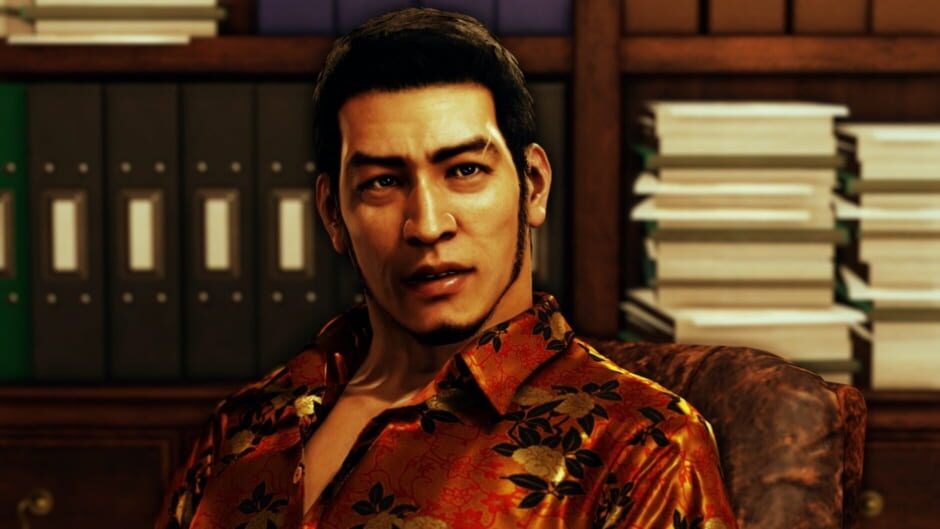
Judgment stands out as one of the best Action/Adventure titles in recent memory.
90
Verdict
94%
Steam
83
IGDB
Verdict score based on confidence-adjusted Steam reviews?
Very Positive on Steam (94% positive from 11K reviews)
Critically acclaimed (83/100 critic average)
No significant drawbacks reported
Judgment is a 2018 action-adventure video game developed by Ryu Ga Gotoku Studio and published by Sega. A spin-off to the Yakuza series, it was released for the PlayStation 4 in December 2018 in Japan and June 2019, worldwide. A remastered version of the game, with the subtitle Remastered in Japan and Asia, was released for the PlayStation 5, Stadia, and Xbox Series X and Series S in April 2021. A port for Amazon Luna was made available on December 16, 2021. A Windows port was released on 14 September 2022 through Steam. Judgment follows lawyer-turned-detective Takayuki Yagami and his allies as they explore a case involving corpses whose eyes have been removed. The player controls Yagami in the fictional Tokyo district of Kamurocho, where he fights thugs and yakuza while carrying out missions involving chasing, stealth, and searching for clues.
Runs well on modern hardware.
Last updated 11h ago
Magnificent! Mysterious & darkening! A deep dive into a "Yakuza" alternative from the perspective of a detective. Will the law prevail ? Take the journey and you shall find out an extraordinary experience.
Judgment is pretty good spin-off of the Yakuza series. No, wait, let me rephrase that. Judgment is a Yakuza game. Quite literally. Same skeleton, different skin. They managed to recycle a LOT of content from older games, including stuff like the chasing minigame from 4 and 5. But it's a very good chapter of the series, although its full of nitpicks that sour the experience. The gameplay at first feels like it will be a bit different from the main series, with a slower, more tactical fighting system since you aren't the powerhouse Kiryu was. Then you get one speed and power upgrade and you are back at Kiryu levels of speed and damage. You get two stances, one that is supposed to be area damage and one focused damage, but I really didn't feel it. Both work fine on all occasions, the Tiger stance feels to have more moves though. You have a bunch of cool moves like wall jumps and vaults that give you some cool mobilty, feeling like a mix of Akiyama and Kiryu's moveset. The story is actually pretty good! Yagami and his very tight pants are a refreshing new player character. The support cast is also pretty good. I was surprised on the direction it went and it sure was a breath of fresh air for the story to be more than (mostly) Yazuka clans fighting. Of course, it fell in some predictable plot points and you could figure out the bad guys the first time they show up. My problem with the game are several small problems that amount to a very bad stain on the overall fun. Some include: - Mortal wounds: Some enemies (mostly minibosses and bosses) can do a strong attack that causes extra damage AND reduces your max health. You need to go out of your way to get a medkit or ask a doctor in one particular place to heal you. This gets very bad when one very recurrent miniboss shows up. - Excessive time wasting: Some stuff in this game really requires you to lose time for very small rewards. Side stories, NPCs and a lot of other stuff require you to walk everywhere, pick a lot of random items and get a lot of money to progress. Extracts are a nightmare with the mount of materials you need, and they work for like 20 seconds, which is a shame because they give you some insane new skills, but the time required isn't worth the results. - Too many fights: Everywhere you walk, there are enemy NPCs waiting for you. You try to walk around them, a new group spawns. This gets very bad when the minibosses show up, that increases the amount of enemies in the map until you defeat them or wait like 10 minutes for them to go away. The rewards are terrible and eventually you have no reason to fight them. - Blockfest: Every enemy can block your attacks. You can maybe hit one or two times before the enemy blocks and cancels your combo. Which really sucks because you can do some very long combos, but since everyone can block it, you never get to use them. - Too grindy: The upgrade system uses activity points to buy skills. Some are cheap, but a lot cost more than 1000 points, the most expensive more than 15000. You really don't get much from fights, so you need to complete random activities to get more. Nearly everything has a point reward. A lot of stuff requires money, and if you don't use a mod or cheat to skip it, you are looking at spending HOURS doing the VR missions to get some money. You are looking at 50 million or more to get all the stuff you can use money on. - Missable content: A lot of achievements and items can be missed. Unless you knew about them beforehand, some achievements require you to do stuff on your first try, or wait until the last second to do others. The game doesn't explains how to get some unlocks, like some special moves that you need to unlock by playing the VR minigame, then spend millions to unlock the long courses, then land on a specific spot, then do a minigame, THEN complete the VR minigame without failing. - Completionist HELL: To get all achievements, you need to do a LOT of stuff in the game, like winning 30 shogi games, 60 mahjong games, defeat all Virtua Fighter levels (with the cheating, input reading, auto counter, extra damage AI!), get all missable achievements, finish every store list, defeat 3000 enemies, 50+ million yen, all drone parts, the list goes on and on. - Tailing missions: Oh god WHY do they exist? Literally all you do is walk slowly for 5 minutes, hiding behind props and hoping the NPC AI doesn't freaks out and gets stuck in a loop. Its a major waste of time that adds nothing to the game. Its a good game, but has some pains that come from other Yakuza games. Didn't had any glitches other than music missing from the drone races due the amount of crashing noises and some weird camera problems when you finish/reset a mission.
Played this after playing every Yakuza game and I gotta say, I now believe the Judgment truthers. This was so so so much fun, every character is lovable and cool, story was the best thriller I've seen in this franchise so far and the combat was nice! The detective vibes were immaculate and every investigation was intriguing. The finale was super elaborate and exciting too, just cannot think of anything but nonstop praises for this game.
Reviews sourced from Steam. All reviews belong to their respective authors.
Data sourced from RAWG, Steam, IGDB, CheapShark, Wikipedia, HLTB, and GX Corner. Sources: rawg, steam, cheapshark, igdb, wikipedia.
All game titles, trademarks, and copyrights belong to their respective owners.
