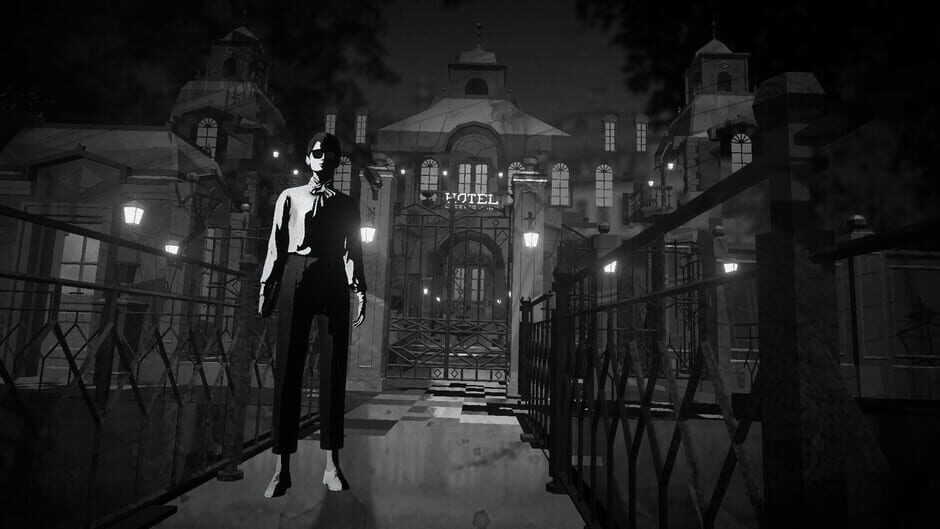
A masterclass in adventure design, Lorelei and the Laser Eyes delivers an unforgettable experience from start to finish.
92
Verdict
94%
Steam
89
IGDB
Verdict score based on confidence-adjusted Steam reviews?
Very Positive on Steam (94% positive from 2.9K reviews)
Critically acclaimed (89/100 critic average)
Compelling narrative and story
Rich open world to explore
No significant drawbacks reported
Lorelei and the Laser Eyes is a 2024 puzzle game developed by Simogo and published by Annapurna Interactive centered on exploring and problem-solving across a massive hotel, without prior explanation as to the player's whereabouts, identity, or relations. This information is instead revealed over the course of the game. Likened to classic point-and-click adventure games such as the Monkey Island series, the game has been described as "one big puzzle box" by IGN. Released for Microsoft Windows and Nintendo Switch on 16 May, 2024, and 3 December 2024 for PlayStation 4 and PlayStation 5, Lorelei and the Laser Eyes was also nominated for Best Independent Game at The Game Awards 2024.
Runs well on modern hardware.
Updated 2h ago
This is probably the most stylish and well-presented puzzle game I've played, but there's a few caveats that, in my eyes, kept it from being perfect. The typical flow of the game is that you explore a large, complex hotel/mansion filled with locked doors that each require some kind of code or key. The codes and keys tend to come from one of two ways: either all of the necessary information is present all at once and you just have to put things together, or you have to come back later with new information (or review previously learned information). The solutions to these puzzles tend to be thematic to the story's narrative. The story itself was fairly interesting, if obtuse. You have to be really paying attention and piecing things together to grasp what's actually happening, and it's muddied somewhat with the game often being really metafictional in how it presents information. The ending of the game and certain major reveals do a good job of clarifying things, although it still expects the player to generally piece together what actually happened. You're not given very much information for free, but instead have a lot of disparate threads that you can put together the full story on your own from (in a way, making the story another one of the game's puzzles). As for the puzzles, they're mostly a mix between either simple logic/number puzzles or puzzles that more or less amount to fetch quests for information. Certain later puzzles are a combination of the two, where you might have to get information from one place to solve a puzzle that gives you information that can be put together to solve an even bigger puzzle. Since you're juggling a lot of information, the game generally does a good job of keeping all of your learned information together in the menu, but expects you to personally note down solutions and codes that might be used elsewhere. My notes ended up being a mix of trying to solve puzzles on the page (good) and copying down information for later puzzles (often not so good). Unfortunately, you don't always know what's going to be important later, which means the back half of the game involves a lot of back tracking to revisit something you already solved so you can get the correct information to input somewhere else. I think the devs realized this, because around the same point in the game, you get access to a way to temporarily increase your movement speed. In general, there's a mix of great puzzles that felt really satisfying to solve and more boring puzzles that didn't involve much thinking and were instead just tests of copying information from one place to another. The puzzles do ramp up in difficulty over the course of the game, but this is typically done by merging the two styles of puzzle, which was hit or miss for me. The game's presentation was probably the strongest aspect for me. The art direction is fantastic, and it's accompanied by a solid, atmospheric soundtrack. My playthrough was about 18 hours long and I went for 100% completion of the puzzles (which isn't necessary, you can reach the end without doing everything). There's a few things that aren't so good. One of my bigger complaints is the control scheme. It's built to be played with controller, but only uses one button (every button on the controller does the same thing). This means that if you want to exit a screen, there's no "back" button to press, but you instead have to navigate over to the hud element that lets you exit. Many puzzles involve entering information on a dial, and instead of letting you scroll back and forth, you advance one step by pressing the button, so if you skip past what you wanted to enter, you need to loop all the way back through everything. There's a mod that fixes the control scheme, which might be worth checking out if that's a dealbreaker. Another problem is the way the game can cause you to lose progress. Certain scenes in the game can give you a game over if you give an incorrect answer, forcing you to restart from your last save. All this really means is that you need to redo everything you did since your last save and then you get a chance to try again. There's usually ample warning for when one of these scenes is coming up, but I can see someone messing up and losing a lot of progress and having to do a lot of boring retracing their steps afterward. If you're interested in puzzle games (or mystery stories), pick this up if you have enough patience for some of its more annoying aspects. If you can get through that, there's a lot of things about this game to love, and it's still one of the best puzzle games I've played despite its handful of problems thanks to its great style, interesting story, satisfying solutions, and the engagement it gets out of the player.
Puzzles were super cool, game is BEAUTIFUL, very atmospheric and I found it scary at first because I'm a crybaby but thankfully it did pass lmao (note that there is one big jump scare that made me jump out of my chair but it was not scary afterwards, felt more like a GOTCHA! thing) Great game, I had a blast, it was not too difficult but really interesting and I really liked the story. I'll keep thinking about it for a while I think and I love how it also makes you ponder about art, its mediums and its impacts. (note: my playthrough actually lasted 10h for 99.6% truth completion, i just let the game go on for a full day, so keep that in mind for game duration)
This game is great and a lot of fun but ♥♥♥♥ these puzzels are insaine sometimes and are stupidly complicated and sometimes this game does really tell you anything so you are woundering for 30 minutes tryign to find a new puzzel to solve to progress.
Reviews sourced from Steam. All reviews belong to their respective authors.
Data sourced from RAWG, Steam, IGDB, CheapShark, Wikipedia, HLTB, and GX Corner. Sources: rawg, steam, igdb, wikipedia.
All game titles, trademarks, and copyrights belong to their respective owners.
