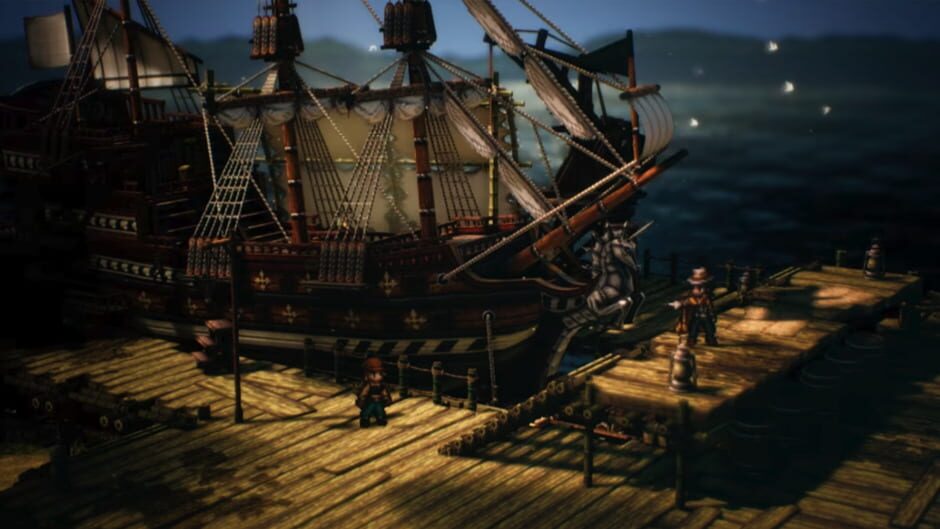
A masterclass in strategy design, Octopath Traveler 2 delivers an unforgettable experience from start to finish.
92
Verdict
94%
Steam
89
IGDB
Verdict score based on confidence-adjusted Steam reviews?
Very Positive on Steam (94% positive from 16K reviews)
Critically acclaimed (89/100 critic average)
No significant drawbacks reported
Octopath Traveler II is a 2023 role-playing video game developed by Square Enix and Acquire and published by Square Enix. It is a sequel to Octopath Traveler (2018), and the third entry in the series after the prequel mobile game Octopath Traveler: Champions of the Continent (2020), though it features a new cast of characters and setting separate from prior games. It was released worldwide in February 2023, for Nintendo Switch, PlayStation 4, PlayStation 5 and Windows; it is the first Octopath game released on PlayStation platforms. Xbox One and Xbox Series X/S versions were released in June 2024.
Runs well on modern hardware.
Last updated 8h ago
Good game overall. Good: - Upgraded combat system from OT1; - Class system is very enjoyable; - Soundtrack is quite nice; - Progression level of your starter character is well balanced. Bad: - "Are you in a journey? Can i join you?" - This is how dumb the recruitment of the other characters is. - Most stories were made for children. Most characters basically beat their enemies with the power of friendship; - Even tho you don't need Nuts at all, it still feels bad reaching the late game and there is no efficient way to farm it; - A lot of the side quests are VERY hard to complete without a guide, there are zero hints about what you are supposed to do; - Your starting character is locked until you finish the main quest. This completely breaks the level balance of the other characters to their respective quests. You either choose 4 and finish all their quests, then start with a team full of level 1 chars with end game gear, or keep changing your other 3 members, leaving your main character one-shotting everything.
[b]A great game about a journey through a beautiful yet cruel world.[/b] The text-heavy game tells numerous individual stories about a world shaped by loss and betrayal, yet one in which there is still hope for friendship and humanity. A varied combat system, lovingly crafted characters, an atmospheric soundtrack and excellent Japanese voice acting provide plenty of enjoyment in this fantastic pixel-art world. That said, the game also has its weaknesses. Strategic elements are rather rare during combat as the characters level up so quickly that brute force is usually the most effective strategy, the chapters generally follow a repetitive story–levelling–boss fight pattern, and the individual stories are only loosely connected or lose contact with the overarching story altogether. However, the story of the cleric Temenos is refreshingly different, as he uncovers a conspiracy as a skilled detective and unravels the overarching story. All in all, a great casual game that I happily spent a lot of time playing.
Much better than the first one! It's nothing to write home about, but it's a chill game for the most part. Much less of a slog because of your special move gauge. I think the stories are stronger, though admittedly I only finished 4 out of 8 characters' routes. Get it on sale or something.
Reviews sourced from Steam. All reviews belong to their respective authors.
Data sourced from RAWG, Steam, IGDB, CheapShark, Wikipedia, HLTB, and GX Corner. Sources: rawg, steam, igdb, wikipedia.
All game titles, trademarks, and copyrights belong to their respective owners.
