OMORI stands out as one of the best RPG/Casual titles in recent memory.
92
Verdict
97%
Steam
83
IGDB
Verdict score based on confidence-adjusted Steam reviews?
Overwhelmingly Positive on Steam (97% positive from 86K reviews)
Healthy player count of 572 concurrent
Critically acclaimed (83/100 critic average)
Standout indie gem
No significant drawbacks reported
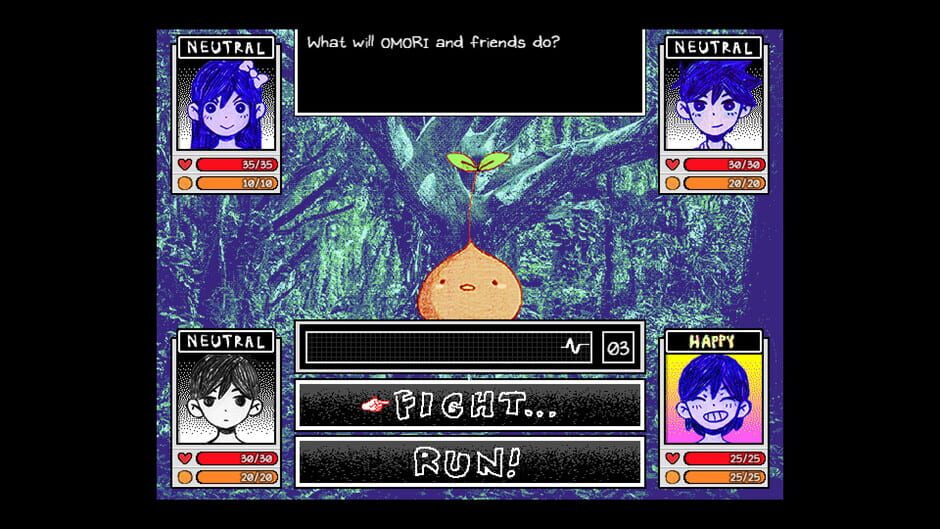
Omori is a 2020 role-playing video game developed and published by indie studio Omocat. The player controls a hikikomori teenage boy named Sunny and his dream world alter ego Omori. The player explores the real world and Sunny's surreal dream world as Omori, either overcoming or suppressing his fears and repressed memories. How Sunny and Omori interact depends on choices made by the player, resulting in one of several endings. The game's turn-based battle system includes unconventional status effects based on characters' emotions. Prominently portraying concepts such as anxiety, depression, psychological trauma, self harm, and suicide, the game features strong psychological horror elements.
Runs well on modern hardware.
Last updated 4d ago
A heartbreaking story of forgiveness. This game left an impact on me that I cannot convey in words.
OMORI is probably my favourite psychological horror game I’ve played, right up there with DDLC. What hit me hardest wasn’t even the horror itself, it was how familiar some of Sunny’s coping mechanisms felt. The whole idea of retreating into your own head, building a safer version of reality, avoiding things because facing them feels too difficult, and just sort of existing in that numb in-between state — that stuff got to me way more than I expected. Headspace especially really stuck with me. At first it just feels like this colourful, goofy RPG world full of weird enemies and dumb jokes, but the longer you play, the more you realise what it actually represents. It’s comfort. It’s avoidance. It’s somewhere you can go where everything is familiar and nothing truly has to change. Then there’s White Space, which somehow feels even more real in a different way. Just sitting there. Nothing happening. Nothing hurting, but nothing really moving forward either. The game slowly takes all of that comfort away from you and forces you to look at what’s underneath it. And that’s where OMORI became genuinely upsetting for me, because it didn’t feel like I was just watching a character deal with something anymore. There were moments where I understood why Sunny wanted to stay in his own head. The horror is incredible because it isn’t just “scary imagery = scary.” So much of it is built around memory, guilt, repression and the fear of confronting something you’ve spent years avoiding. Tiny details that seem random at the start suddenly mean everything once you understand them. Stairs, doors, photos, the piano, the violin, even lines you barely paid attention to. By the ending I was completely emotionally cooked. And even after finishing it, I kept thinking about earlier scenes and realising what they meant in hindsight. The soundtrack is beautiful, the characters feel genuinely lovable, and the contrast between Headspace and the darker parts of the game is insane. Some sections drag a little and the combat can get repetitive, but I honestly stopped caring about that by the end. 10/10. One of those games that didn’t just entertain me, it made me recognise parts of myself I wasn’t expecting to see in it. Go in blind. Seriously.
OMORI is a phenomenal experience that is extremely demanding of the player. It is an extremely long game, and certain aspects of the game which focus heavily on combat rather than character-driven beats can feel like drags or distractions from the main story even when providing subtle pieces to the overarching theme. Although some metaphorical means of storytelling can appear overly confusing or somewhat contradictory at specific points, the real-world segments of the game provide more than enough for the story as no character of the primary friend group fails to be fascinatingly complex in their display of grief. Forgiveness is important even when the action can feel unforgivable, and OMORI uses an extreme scenario to showcase how difficult understanding this can be. This is not a perfect game, but it is a beautiful work of art, and it is absolutely worth playing.
Reviews sourced from Steam. All reviews belong to their respective authors.
Data sourced from RAWG, Steam, IGDB, CheapShark, Wikipedia, HLTB, and GX Corner. Sources: rawg, steam, igdb, wikipedia.
All game titles, trademarks, and copyrights belong to their respective owners.
