With near-perfect execution, Ostriv is a must-play for any strategy fan.
93
Verdict
95%
Steam
—
IGDB
Verdict score based on confidence-adjusted Steam reviews?
Very Positive on Steam (95% positive from 7.6K reviews)
Highly rated by 15 players
Still in Early Access — content may be incomplete
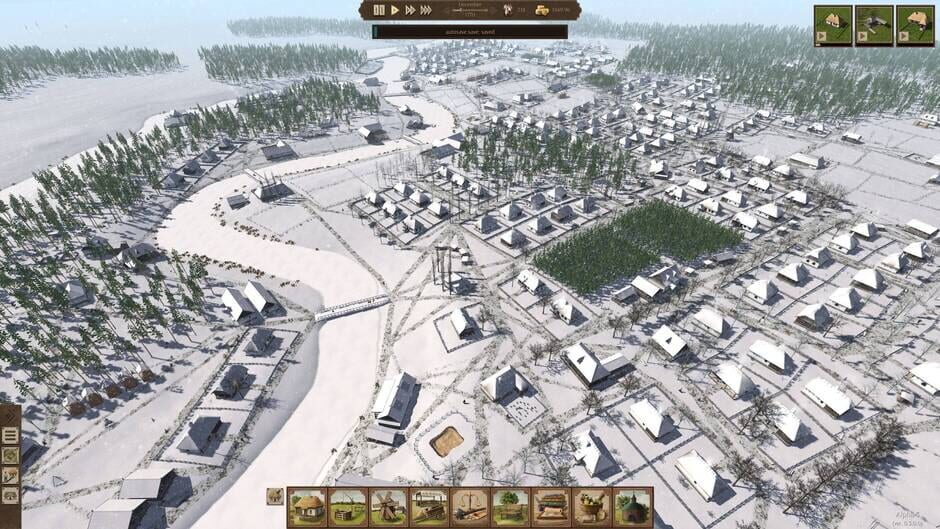
Ostriv is a city-building game that puts you in a role of a governor of an 18th century Ukrainian town to challenge your creative skills and management abilities. Ostriv aims to raise the bar of city-building experience by adding a huge amount of possibilities and removing annoying limitations. It allows for truly organic town layouts without the grid and angle restrictions on a three-dimensional landscape. The goal is to make player's creations to become alive and believable communities where real-life problems would arise, thus making the late game a new challenge rather than a repetitive chore.
Runs well on modern hardware.
Updated 3h ago
People sleep on this game. Played Manor Lords before this, but Ostriv is way more in depth. Choosing where buildings gather their resources from, making storages grab from other storages. The transport logicstics are also way better. They're not going to walk to the other side of town to grab stone from the mine if there's stone stored closer. Only downside; No war-like mechanisms.
after the second winter, my eldest villager died (RIP gramps). i built a grave for him. over time, I saw his relatives visiting his grave and i was like 'wow...'. i really love the attention to detail in this game. i hope it'll get more content.
I was one of Russia`s top fpv drone operators, once I realized the Ostriv Dev is from Ukraine I deserted my unit and moved to Germany. Building Ukrainian villages is much more relaxing than destroying them.
Reviews sourced from Steam. All reviews belong to their respective authors.
Data sourced from RAWG, Steam, IGDB, CheapShark, Wikipedia, HLTB, and GX Corner. Sources: rawg, steam, igdb.
All game titles, trademarks, and copyrights belong to their respective owners.
