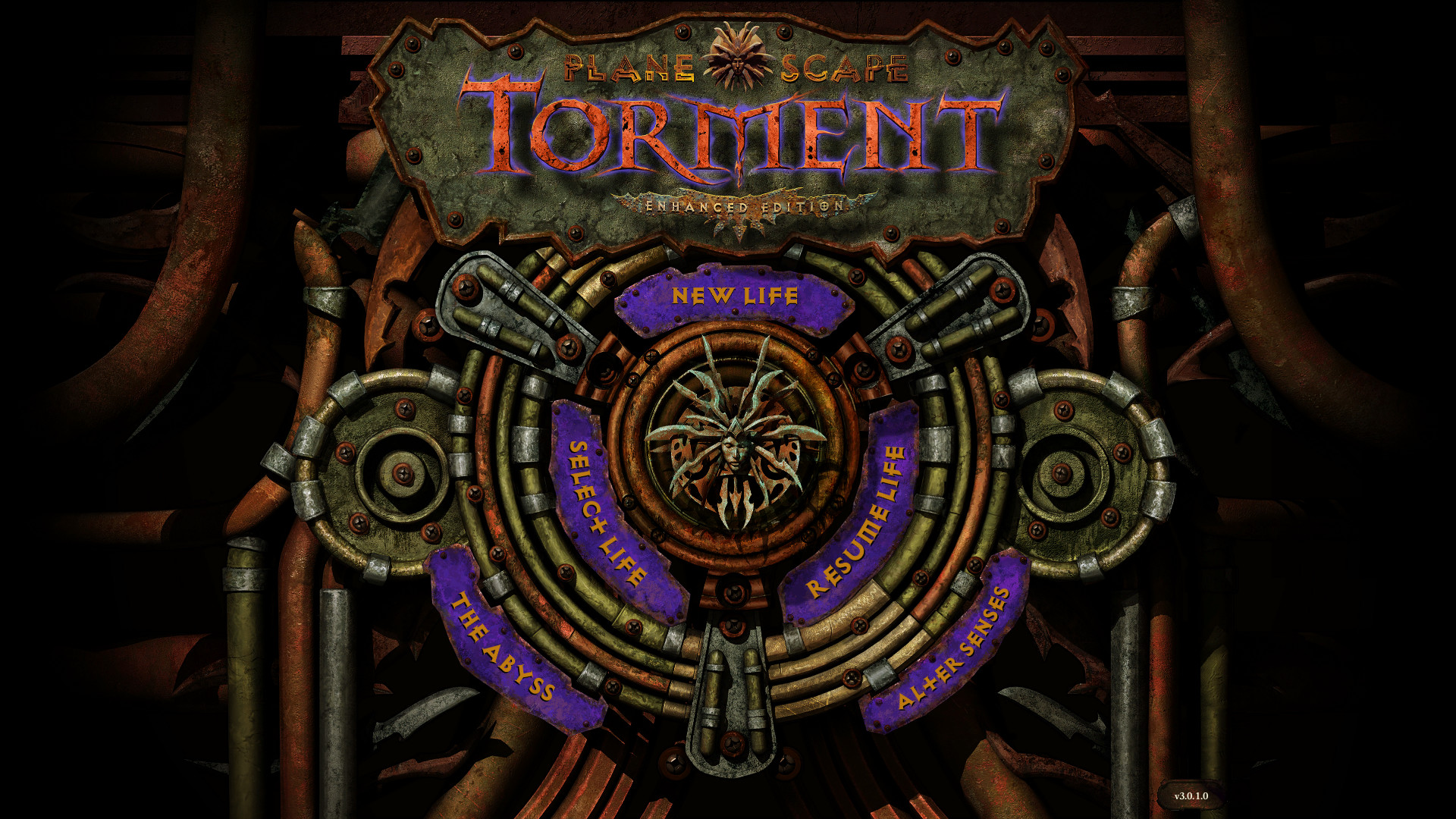
With near-perfect execution, Planescape: Torment: Enhanced Edition is a must-play for any adventure fan.
90
Verdict
95%
Steam
80
IGDB
Verdict score based on confidence-adjusted Steam reviews?
Very Positive on Steam (95% positive from 5K reviews)
Compelling narrative and story
Outstanding soundtrack
No significant drawbacks reported
Planescape: Torment is a 1999 role-playing video game developed by Black Isle Studios and published by Interplay Entertainment for Windows. The game takes place in locations from the multiverse of Planescape, a Dungeons & Dragons (D&D) fantasy campaign setting. The game's engine is a modified version of the Infinity Engine, which was used previously for BioWare's Baldur's Gate, an earlier D&D game set in the Forgotten Realms.
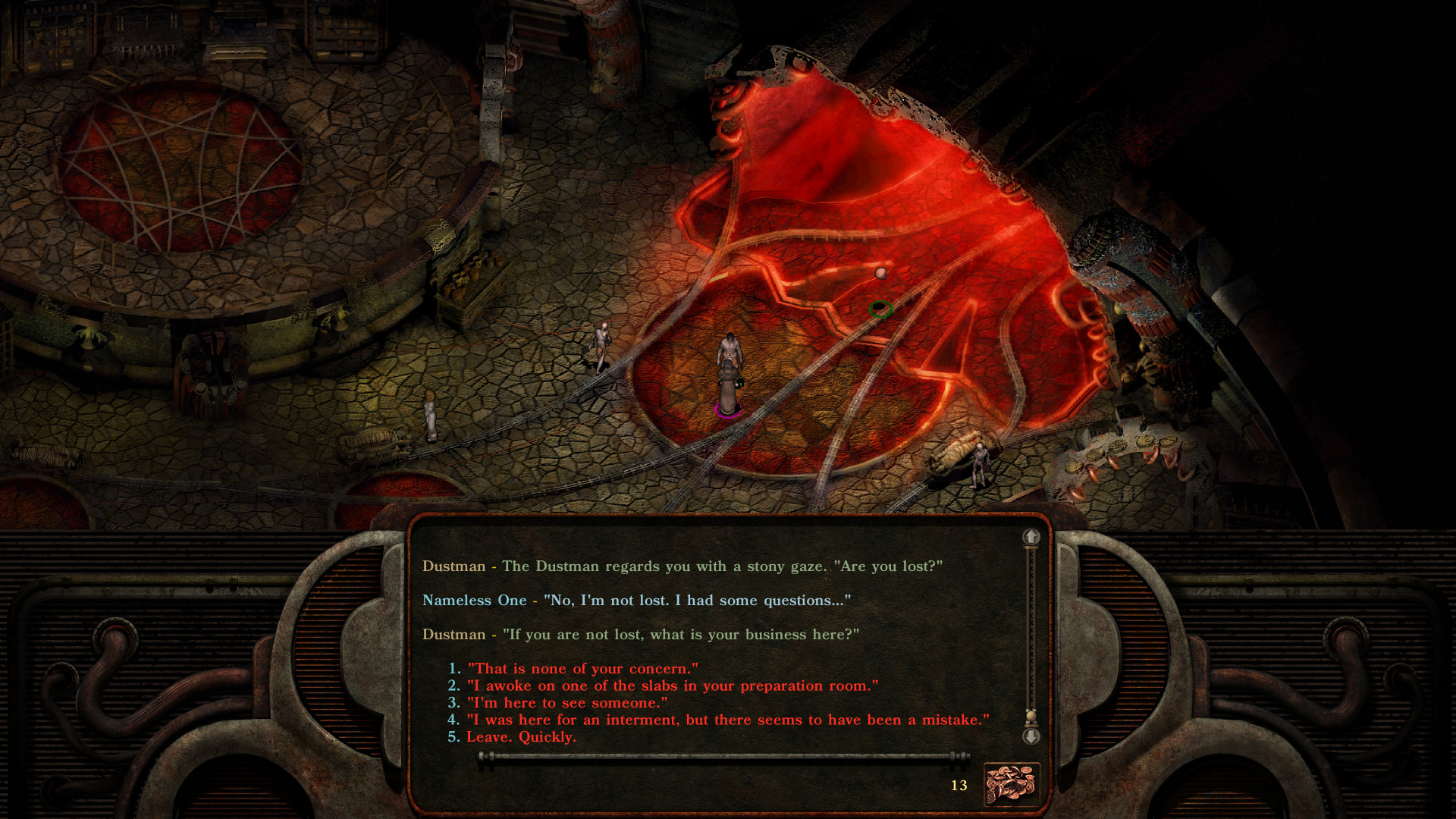
Runs well on modern hardware.
Last updated 10d ago
[code]While not all components of Planescape: Torment have aged well in the 25+ years since its original release, it remains a great game for players who prefer role-playing games with a focus on dialogue instead of combat, offering an delightfully strange and atmospheric tale set in one of D&D’s most famous D&D cities[/code] Among the games that are based on the Infinity Engine, which mostly brought the [i]Dungeons & Dragons[/i] 2e ruleset to life, [i]Baldur’s Gate I & II[/i] (1998, 2000) remain the most popular to this day and are usually credited as all-time classics whose influence shaped roleplaying-games as a whole. In contrast, [i]Planescape: Torment[/i] (1999) is usually described as a less approachable package due to its focus on dialogue instead of combat – as well as being set in the comparatively bizarre [i]Planescape[/i] setting of [i]Dungeons & Dragons[/i], rather than the straightforward [i]Forgotten Realms[/i]. However, by focussing on the narrative aspects of roleplaying-games, [i]Torment[/i] has emerged as a popular recommendation for players who would rather exchange words with NPCs than blows – and while it’s usually only ranked as the third-most popular Infinity Engine game, [i]Torment[/i] has thus gained a cult following on its own. Now, this review does not aim to draw up detailed comparisons between [i]Torment[/i] and the other Infinity Engine games, as doing so would not be adequately possible in this format. Yet, the legacy of [i]Torment[/i] is important to mention, as it already showcases the game’s strength – putting its narrative above everything else – as well as its weakness – being less well-rounded in other aspects as a consequence. Especially thanks to the passage of time, more than 25 years since its original release, [i]Torment[/i] does suffer from a lot of gameplay-related issues, from a weak combat system to a clunky user interface, which do diminish the overall experience. However, the actual writing – an enthralling setting, memorable characters, exciting plot developments and decisions that actually affects progression – still manages to shine through, turning [i]Torment[/i] into the enjoyable experience that’s still worth playing today, even if it may take a bit of getting used-to. Speaking of, considering this current version of [i]Torment[/i] was released by BeamDog in 2017, eighteen years after the original, one may wonder if it received an overhaul to the degree of feeling like a modern cRPG. Unfortunately, while it does have become the best way to play the game today – along with the [url= https://www.pcgamingwiki.com/wiki/Planescape:_Torment_Enhanced_Edition#Essential_improvements]Unfinished Business mod[/url] for additional improvements – it’s important to note that most enhancements pertain to technical upgrades (bug fixes, UI resolution scaling, remastered soundtrack, etc.) and a few gameplay improvements (such as tab highlighting, area zooming or a quick loot function). As such, this version of the game should be treated as a way to easily make the game available on modern platforms, rather than a rework with the goal of modernising the contents themselves. Naturally, with most of [i]Torment[/i] remaining untouched in terms of design, a cRPG from 1999 does not offer the same comfort as modern role-playing games do. In particular, even getting familiar with the different game mechanics can prove tough, as the game initial guidance for new players is lacking: Although a new “Help Overlay” button was added in the “Enhanced Edition” and there’s a [url= https://steamcdn-a.akamaihd.net/steam/apps/466300/manuals/PSTEE_Manual-v1.1.pdf?t=1572456225]12-page manual[/url] available online, these can’t make up for the complexity of the underlying [i]Dungeons & Dragons[/i] 2e ruleset on their own. Chances are high that those already interested in this game are familiar enough with the genre to be able to make it past the beginning – but for players without previous cRPG experience, this is not a great starting point. Even if you can get past the initial hurdles however, the gameplay of [i]Torment[/i] still leaves a lot to be desired. While the necessary cRPG elements are all in place, as expected from an Infinity Engine game, [i]Torment[/i] does not offer much more than that. From the questionable pathfinding to the protagonist-centred level-up and obstruse class switching process, unnecessary inventory management and the clunky combat, not to mention the cumbersome user interface, there’s simply a lot of room left for improvement – especially when viewed from a modern perspective, taking the quality-of-life developments made in the genre during the past 25 years into account. While the gameplay [i]Torment[/i] never reaches the territory of being actively annoying or even entirely unplayable, it simply isn’t good enough (anymore?) to warrant a playthrough on its own, compared to the competition. Age has been more kind to the narrative aspects of the game – while some dialogue trees could’ve been more streamlined and the overall text formatting improved (maybe through an option allowing for full-screen text rather than small dialogue boxes?), the setting, characters, plot and dialogues are definitely still worth a look today. Even after all these years – and a lot more undead protagonists in videogames, for example – [i]Torment[/i] still manages to craft a surprisingly complex tale around it’s undying hero and his unique companions, constantly questioning the nature of men and death itself. [i]Torment[/i] has been called a “philosophical game” quite often and while there are certainly a lot of philosophical themes to be encountered, it also needs to be mentioned that they’re still part of a personal story, woven into the journey of an amnesiac undead trying to regain his memories in a strange city of different factions and species, pouring in from constantly changing portals. Don’t expect [i]Torment[/i] to be a straightforward lecture in philosophy – it’s a lengthy fantasy story with interesting questions and scenarios to be pondered on, seamlessly integrated into the main plot as well as optional side quests. In particular, it’s a worthwhile virtual novel for fans of deep worldbuilding, excessive but lore-heavy dialogues offering multiple consequences, and a story that keeps gaining layers and rewards those who always pay attention. That said, even the writing is not without its faults. As typical for role-playing games, pacing is an issue, as [i]Torment[/i] can quickly devolve into hours of side-questing before the main plot comes into reach again. In addition, the first half of the game appears much more realised than the second half, which becomes a lot more streamlined and almost skips through some of the events that now take place. Furthermore, [i]Torment[/i] feels almost entirely devoid of party interaction, as the companions mostly interact with the protagonist but not with each other. Still, even with its apparent edges and the unfortunate effects of ageing, [i]Torment[/i] remains a great choice for everyone who prefers story and dialogues in cRPGs over combat, a bizarre scenario over classic fantasy and slow but rewarding worldbuilding over a straightforward plot. With its competition constantly increasing over the years, it may not always be counted among the best-written RPG anymore, but with a bit of effort it still remains an incredibly enjoyable experience to this day.
Good game. Deep gameplay. It's also good for multiple runs.
Simply amazing. One of the best storytelling games I've ever experienced, blends fantasy and philosophy super well to create a truly unique experience.
Reviews sourced from Steam. All reviews belong to their respective authors.
Data sourced from RAWG, Steam, IGDB, CheapShark, Wikipedia, HLTB, and GX Corner. Sources: rawg, steam, igdb, wikipedia.
All game titles, trademarks, and copyrights belong to their respective owners.