With near-perfect execution, Spiritfarer is a must-play for any adventure fan.
92
Verdict
95%
Steam
88
IGDB
Verdict score based on confidence-adjusted Steam reviews?
Overwhelmingly Positive on Steam (95% positive from 51K reviews)
Healthy player count of 575 concurrent
Critically acclaimed (88/100 critic average)
Standout indie gem
No significant drawbacks reported
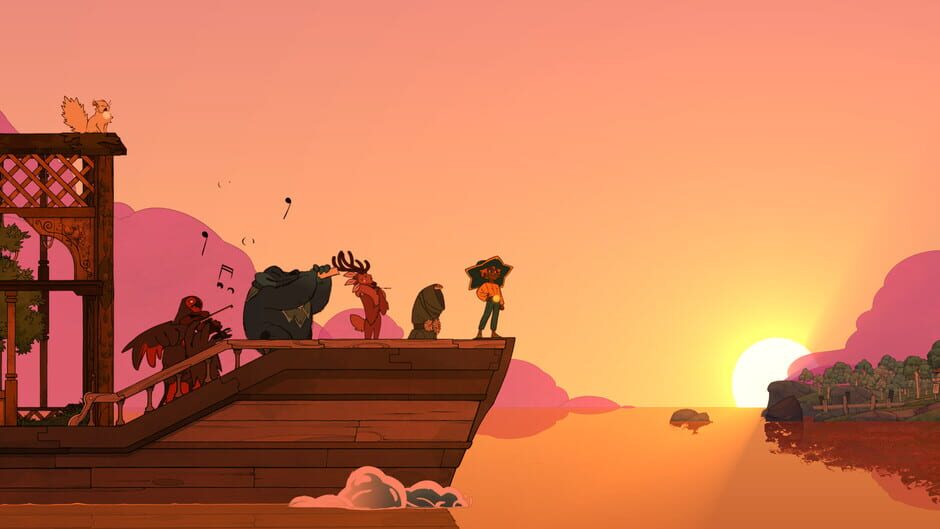
Spiritfarer is an indie management sim and sandbox action game developed and published by Canadian studio Thunder Lotus Games. It was released for Microsoft Windows, macOS, Linux, PlayStation 4, Nintendo Switch, Xbox One, Android and Stadia in August 2020. The main character, Stella, becomes a "Spiritfarer" whose job is to ferry the spirits of the deceased to the afterlife, accompanied by her cat, Daffodil. The game revolves around a series of quests given to Stella by the spirits aboard her ship.
Runs well on modern hardware.
Last updated 1d ago
i do feel the need to frontload my one hangup, both because it's potentially very serious but also somehow didn't matter at all. i think there may be a slight incongruity between the optimization-brain the gameplay loop inevitably encourages, and the fact that Mundane Time Spent With Each Spirit is the game's main emotional currency, more so than even any of its written moments. the opening hours, with the least quality of life and the most dead ends, inevitably end up sticking out the most vividly, as the slow pace allows for the whole social ecosystem of ur boat to really just Sit There and become a comfort that is slowly dismantled and reconfigured. i think there was a stretch in the late-middle where i was moving too fast and i was stuck on a very big and lonely boat, and from then on i started introducing some deliberate inefficiencies into my play (primarily my quest prioritization) to make my final slate of companions really juicy. its difficult to fully defend a system that works best with some kind of unmotivated self-policing from the player. on the other hand, that feeling of rushing and lost time and loneliness, and my desire to respond to it, actually does feel like a sincere and valid part of the Emotional Shape of my journey with the game. honestly every single part of it does...whatever theoretical clash might exist is tempered by the fact that the gameplay loop itself Feels Like Work...not draining or strenuous work, but certainly an endless list of obligations and efforts for extremely amorphous and ephemeral reward. it taps into a little bit of Death Stranding in that way...the idea that Work That Feels Like It Matters is actually an important fantasy in a world that seeks to alienate us from our labor and those who it might benefit. but ig more than work, it feels like life...a bunch of tasks and days you wont individually remember, that somehow come together into expanses of time that you remember so vividly you could touch them. people coming and going, possibilities expanding, knowledge and experience weighing you down more and more. i think it is a game that expects you to be a little burned out at the end...it feels good to let go. more than anything tho, i just want to commend the emotional variety. i would have been perfectly fine with a version of this game that is much more in line with Millennial Indie Game Twee, i tend to be a soft mark for that stuff. but this is not that game...it is so much more lived-in, so much less emotionally signposty, so much more demanding of the player themselves to navigate their own sometimes very complicated reactions to a spirit's life and death. thats not to say the game doesn't let itself be a little Precious, but with such a full capturing of Life its a good reminder that sometimes life actually is just a little Precious, right next to everything else. absolutely unreal game. i love boats so much.
This is a tricky one to review; I gave it a good chance and got a fair way through it, but unfortunately it just didn't click for me. I'd heard so many good things about it, but it just didn't have the emotional resonance that I was looking for and the fundamental gameplay elements are just too repetitive and tedious. Tending to plants, cooking meals, keeping your passengers fed, searching for upgrade components (most of which then need at least one form of processing before they can be used).... The fishing mini-game quickly becomes tiresome and some fish take literal minutes of effort to catch (with no guarantee that you will). More than once I wasted around five minutes on a fish only for it to get away - combine that with the frustrating "can't sail at night" mechanic (which I understand might be overcome late-game) and how quickly plants need re-watering and you've wasted a good portion of a day just on one elusive fish. The game is also clearly unfinished in some areas, despite receiving multiple content updates post-release - in particular one game mechanic (meditating at certain trees) is introduced by a character and given a tutorial, but it can never be repeated although the specific design of tree is featured prominently in several other locations. The art style is nice, but the reliance on sprite-based graphics means that they are at a fixed resolution, which on modern screens makes a lot of the graphics fuzzy. The music is decent but not particularly memorable. ** SPOILERS FOLLOW ** [spoiler] Perhaps my biggest disappointment with the game was the presentation of the world/afterlife and the lack of character development. The afterlife has all the same problems as the real world - inequality, crime, the need for employment, hunger, mental illness, etc. The areas are well-designed and have an interesting aesthetic but if you actually look at what is being presented, this is a literal nightmare. It's hell. The only release from it comes from boarding Stella's ship and disappearing permanently through the Everdoor into eternal oblivion. it is functionally identical to the life/world that precedes it. This would be acceptable if the spirits developed or come to some kind of understanding or peace during their time in the afterlife, but the majority of them just don't. Giovanni was an adulterous playboy in life and remains completely unchanged and unrepentant in death; his wife finds out about him cheating and tells him to leave, so he just accepts that and opts for oblivion. Astrid falls for his lies (and has her heart broken) again in death; same as life. Alice continues to suffer from advancing memory loss in death, which is horrifying - if you subscribe to the idea of an eternal soul separate from the physical body, then the concept that your very soul is subject to deterioration is genuinely awful. Bruce is abrasive, demanding and bullying and doesn't change his behaviour either. Since he has a detrimental effect on the other spirits on board, from a gameplay perspective you are implicitly encouraged to get him off the ship as soon as possible. The list goes on - none of the characters change and nothing you say or do can affect them in meaningful ways; all you can do is *fail* to provide the things they're asking for, which makes them complain. Lastly, Stella as a character is baffling. She's in the afterlife, so she's clearly dead (and presumably so is the cat - did they die at the same time?) but she reacts to this new plane of existence (and the massive responsibility that she is immediately given by Charon, with no explanation) with nothing but blind acceptance and joyful enthusiasm. It's jarring because it's completely unnatural - no real person would act this way in the same position. She's a silent protagonist and that really hurts the game because it means that the player feels that they have no agency and Stella feels flat as a character. She doesn't challenge any of the spirits' awful behaviours or attitudes and that's frustrating because if this afterlife is not for reflection and growth, what purpose does it serve? It just seems to be a waiting room leading to the Everdoor and the only outcome is inevitable acceptance of that destination and all the mistakes that each spirit made in their prior life.[/spoiler] It's an interesting concept, but the characters failed to connect for me. Look past the colourful presentation and this is a dark, unsettling, fatalistic view of the afterlife with no hope.
Played this right after finishing [i]House House's Big Walk[/i], and what a game to truly appreciate all aspects of life. Although Spiritfarer is a game about death, for me, it's also a celebration of life, both the beautiful and the sad parts, the anger and the happiness, the achievements and the regrets. It's about how the people in your life mold you, and how you also help mold other people's lives. You will cry, maybe not for every single one, but that's okay. Death is just a part of life, and it's not the end of their story. They live on through the lessons and memories they leave with you. Overall, a must-play experience.
Reviews sourced from Steam. All reviews belong to their respective authors.
Data sourced from RAWG, Steam, IGDB, CheapShark, Wikipedia, HLTB, and GX Corner. Sources: rawg, steam, cheapshark, igdb, wikipedia.
All game titles, trademarks, and copyrights belong to their respective owners.
