With near-perfect execution, Stephen's Sausage Roll is a must-play for any indie fan.
94
Verdict
95%
Steam
100
IGDB
Verdict score based on confidence-adjusted Steam reviews?
Overwhelmingly Positive on Steam (95% positive from 1.9K reviews)
Critically acclaimed (100/100 critic average)
Standout indie gem
Steep difficulty curve may not appeal to casual players
Stephen's Sausage Roll is a 2016 puzzle video game developed and published by Increpare Games, the studio of designer Stephen Lavelle. The player controls a character who pushes sausage links onto hot grill tiles to cook them. It was received well by critics and was praised by other prolific indie puzzle video game creators.

Runs well on modern hardware.
Last updated 2d ago
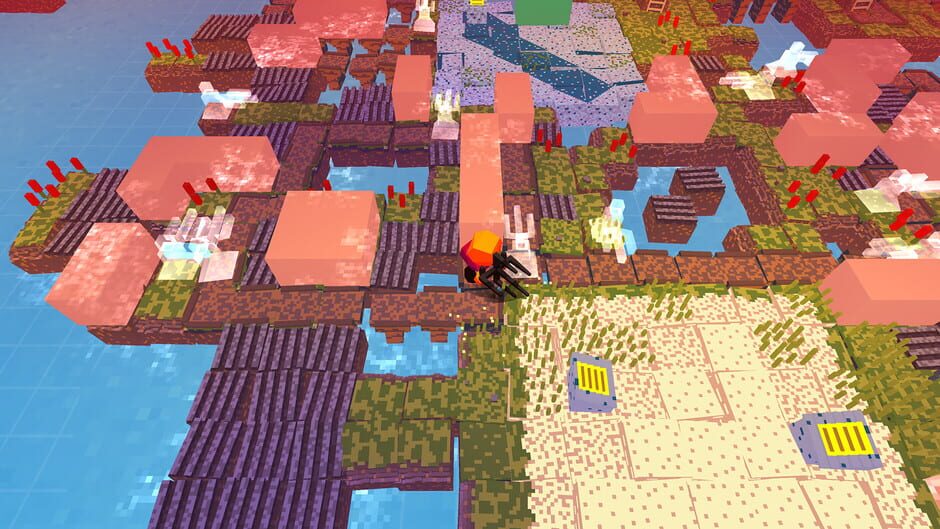
Stephen’s Sausage Roll by increpare games is a puzzle game that disguises extraordinary complexity beneath an almost absurdly plain exterior. At first glance, it appears trivial—blocky islands, oversized sausages, and a protagonist wielding what looks like an unwieldy fork. Yet within minutes, it becomes clear that this is not a casual or whimsical experience, but a rigorously designed test of spatial reasoning and logical foresight. It is the kind of game that doesn’t just ask you to solve puzzles—it asks you to fundamentally rethink how you approach them. The core concept is elegantly simple: sausages must be rolled across grills so that every side is cooked exactly once. That’s the rule, and almost everything in the game flows from it. However, the simplicity of the objective is offset by the intricacy of the movement system. The player character occupies space in a non-traditional way, and every push, pivot, or repositioning of a sausage carries cascading consequences. A single careless move can ruin an entire setup, forcing a restart. The game’s design ensures that every action matters, turning even small decisions into meaningful commitments that must be thought through in advance. What defines the experience is its uncompromising difficulty. There is no onboarding process, no gradual ramp-up designed to ease players into its logic. Instead, it expects immediate engagement with its rules, leaving players to experiment, fail, and gradually build understanding on their own. This can feel harsh at first, but it also creates a uniquely rewarding learning curve. Each puzzle solved feels like a genuine breakthrough, not because it required quick thinking, but because it demanded sustained effort and careful reasoning. The game doesn’t reward instinct—it rewards patience and clarity of thought. The level design is where the game truly excels. Every stage feels intentional, constructed to explore a specific idea or variation of the mechanics without unnecessary repetition. New concepts are introduced subtly, often without explanation, allowing players to discover their implications through direct interaction. This approach creates a sense of intellectual progression, where each solved puzzle expands your understanding of what is possible within the system. Despite the limited set of rules, the game manages to maintain a surprising level of variety, constantly challenging players to adapt their thinking rather than rely on established patterns. Visually, the game is stripped down to the bare essentials. Its low-detail environments and flat color palette might initially seem underwhelming, but this minimalism is entirely deliberate. By removing visual distractions, the game ensures that attention remains fixed on the puzzles themselves. The sparse presentation also contributes to an unusual, almost meditative atmosphere, where the focus shifts entirely to problem-solving. There is a quiet intensity to the experience, as players become absorbed in the logic of each scenario without interruption. The narrative elements are subtle and enigmatic, existing more as fragments than a fully developed story. Occasional pieces of text appear, hinting at themes that are never fully explained. This ambiguity mirrors the game’s overall design philosophy, which avoids explicit instruction or clear answers. The story, much like the puzzles, invites interpretation rather than providing resolution, adding a layer of intrigue without distracting from the central gameplay. Despite its many strengths, the game’s demanding nature makes it a difficult recommendation for a broad audience. Its lack of guidance and steep difficulty curve can be discouraging, especially for players who prefer more accessible or immediately gratifying experiences. Progress often requires extended periods of trial and error, and the mental effort involved can be exhausting. However, for those who enjoy deep, methodical challenges, this intensity is precisely what makes the game so compelling. In the end, Stephen’s Sausage Roll stands as a remarkable example of how far a simple idea can be pushed through thoughtful design. It offers a level of depth and precision that few puzzle games achieve, rewarding persistence with moments of genuine insight and accomplishment. It is not a game that seeks to entertain in a conventional sense, but one that challenges, frustrates, and ultimately satisfies in equal measure. Rating: 9/10
Couldn't get into it. The game looks (intentionally) repulsive and the controls are (intentionally) clunky. The game does not ease you into its mechanics, it starts off with puzzles that I would describe as at least intermediate. Get this if you're a fan of sokobans. If you don't know what a sokoban is, play Monster Expedition and come back to this at a later point in time.
Fantastic puzzle game! Similar to the Witness in terms of difficulty and lack of spoonfeeding, but with a more lighthearted style which doesn't take itself too seriously. If you can't beat a level get drunk and try again, this saved me on multiple occasions.
Reviews sourced from Steam. All reviews belong to their respective authors.
Data sourced from RAWG, Steam, IGDB, CheapShark, Wikipedia, HLTB, and GX Corner. Sources: rawg, steam, igdb, wikipedia.
All game titles, trademarks, and copyrights belong to their respective owners.