
Tennis Elbow 2013 is an exceptional Simulation/Sports that raises the bar for the genre.
90
Verdict
94%
Steam
—
IGDB
Verdict score based on confidence-adjusted Steam reviews?
Very Positive on Steam (94% positive from 730 reviews)
Engaging multiplayer/co-op experience
Limited professional critic coverage
Runs well on modern hardware.
Last updated 2d ago
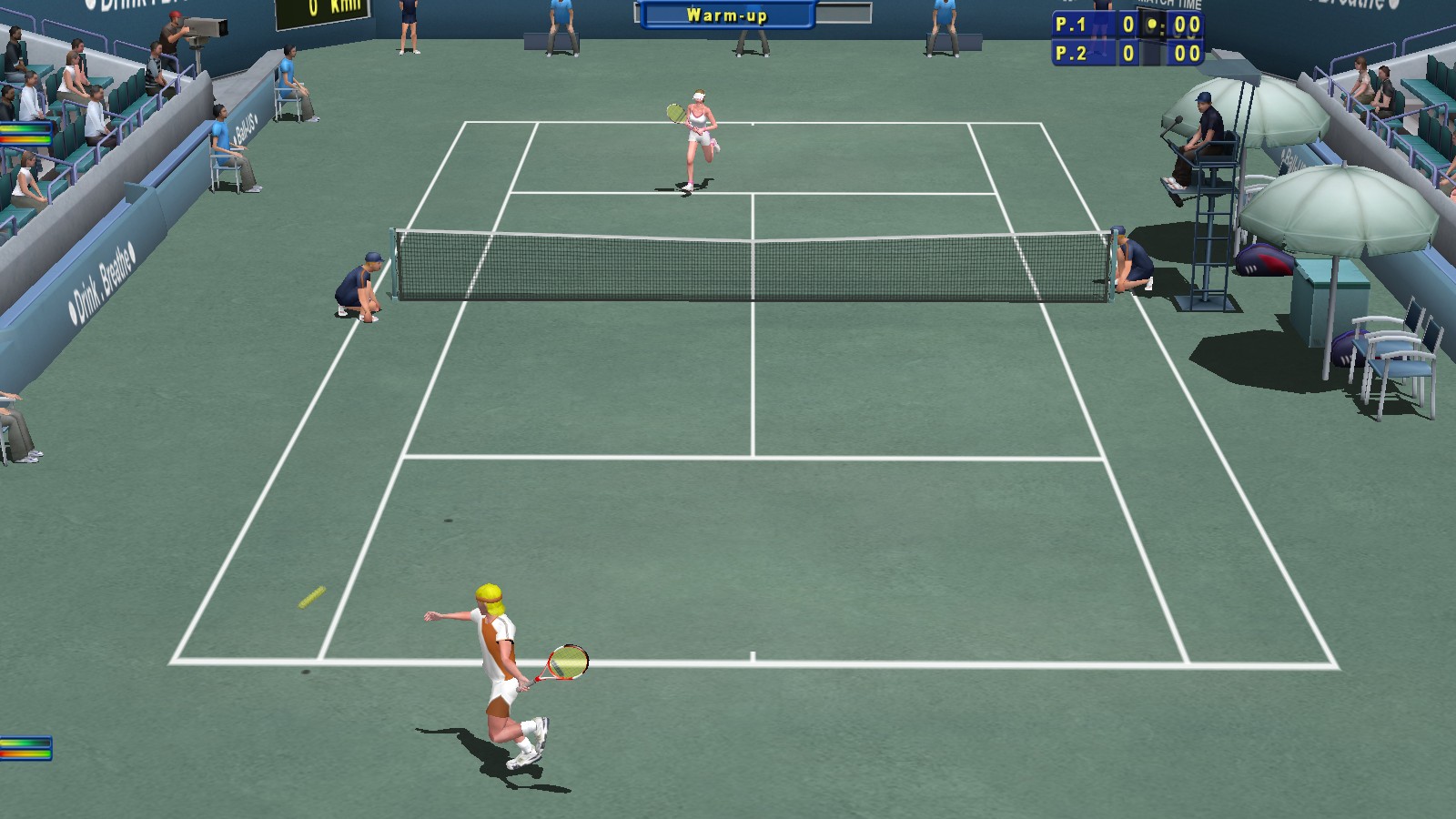
Tennis Elbow 2013 is a tennis simulation built around the idea that believable mechanics and tactical depth matter more than spectacular presentation. Developed and published by Mana Games, it delivers a surprisingly detailed interpretation of the sport despite its visibly dated graphics. Instead of relying on flashy animations or elaborate broadcast effects, the experience concentrates on movement, positioning, timing, shot preparation, and reading an opponent. This approach gives matches a methodical quality that becomes increasingly rewarding as the player learns how its systems interact. The gameplay provides considerably more depth than its straightforward controls initially suggest. Players can use different types of strokes for offensive and defensive situations, including powerful acceleration shots, safer returns, topspin lobs, and drop shots. Positioning is especially important because simply pressing the correct shot button does not guarantee an effective return. Reaching the ball early, preparing properly, choosing an appropriate direction, and understanding the opponent's position all influence the outcome. As a result, longer rallies often become tactical contests where patience and intelligent placement can be more valuable than raw power. An extensive difficulty system helps make this simulation approachable. Six major difficulty levels are divided into numerous sublevels, allowing the challenge to increase gradually rather than forcing players into large jumps in opponent ability. Visual assistance can help newcomers understand positioning and aiming, while experienced players can reduce these aids for a more demanding experience. This flexible structure makes it possible to learn the mechanics progressively while still providing substantial challenge for players who already understand tennis strategy. The World Tour mode is one of the strongest reasons to invest significant time in the game. Rather than presenting isolated tournaments, it simulates a large professional circuit containing thousands of competitors and hundreds of events. Players can create a tennis professional and attempt to climb the rankings through increasingly difficult competition. Singles and doubles events are available, while rankings and tournament progression create a convincing sense of building a career. The sheer scale of the tour helps make individual victories meaningful, particularly when a developing player begins reaching later rounds against stronger opposition. Court surfaces provide another layer of strategy. Nine different surface types are represented, covering variations of clay, grass, hard courts, synthetic surfaces, and indoor conditions. The ball behaves differently depending on the court, meaning a strategy that works comfortably in one tournament may require adjustment in another. Differences in rebound behavior affect timing and positioning, encouraging players to understand each environment rather than treating surfaces as simple visual changes. Match customization is similarly extensive. Singles and doubles are supported, match lengths can be adjusted, and several camera perspectives allow players to find a viewpoint that suits their preferences. Local split-screen competition is available, while network functionality expands the experience beyond computer-controlled opponents. Character customization is relatively modest by modern standards, but it provides enough flexibility to establish a personal competitor for the career modes. Modding support is another significant advantage, particularly for players interested in extending or altering the game's content. Presentation is the area where its age is most apparent. Character models and environments are functional rather than impressive, animations occasionally appear stiff, and the interface has a distinctly older PC-game character. Anyone approaching it expecting the production quality of a contemporary big-budget sports title may find the first impression underwhelming. Audio is similarly restrained, emphasizing basic match atmosphere rather than elaborate commentary or television-style presentation. However, the relatively lightweight visuals also help the game run on modest hardware. Steam Deck compatibility is not officially rated by Valve, so it should be considered Unverified rather than formally Verified or Unsupported. Its relatively modest hardware demands are encouraging, but the absence of an official compatibility rating means handheld users should expect that controls, interface navigation, text readability, or other aspects may require adjustment. Players specifically purchasing it for Steam Deck should therefore approach it as an unofficial rather than guaranteed handheld experience. Where the game ultimately succeeds is in making improvement feel meaningful. Early matches can expose poor positioning and careless shot selection, but experience gradually teaches players how to construct points, anticipate returns, change direction intelligently, defend under pressure, and recognize opportunities to attack. Winning becomes satisfying because progress is closely connected to understanding tennis rather than simply improving character statistics. Tennis Elbow 2013 remains an appealing choice for players who prioritize simulation, career depth, tactical rallies, surface variation, and customization over modern visual polish. Its presentation has aged considerably, but the underlying tennis mechanics remain unusually substantial. The enormous career structure and scalable difficulty also provide excellent longevity. For someone willing to accept its old-fashioned appearance, it offers a thoughtful and highly replayable interpretation of competitive tennis. Rating: 8/10
Reviews sourced from Steam. All reviews belong to their respective authors.
Data sourced from RAWG, Steam, IGDB, CheapShark, Wikipedia, HLTB, and GX Corner. Sources: rawg, steam.
All game titles, trademarks, and copyrights belong to their respective owners.
