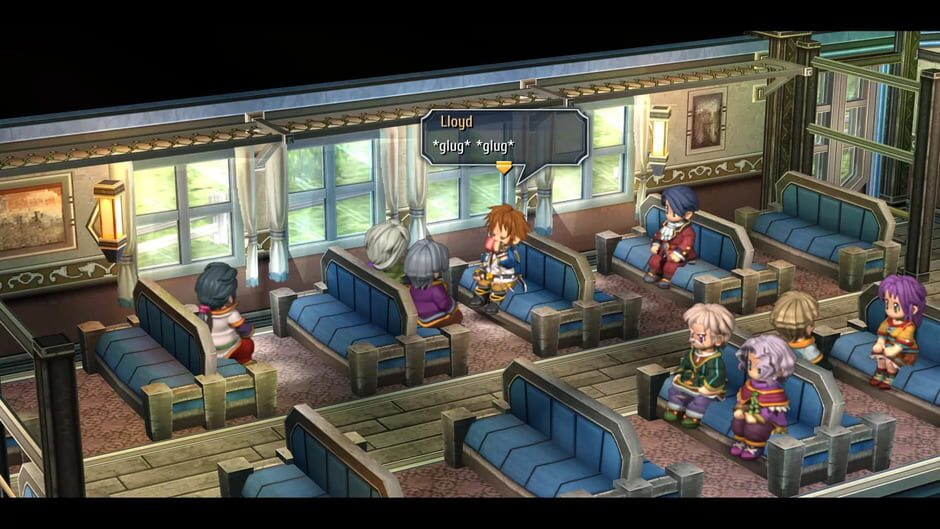
The Legend of Heroes: Trails to Azure stands out as one of the best RPG titles in recent memory.
95
Verdict
98%
Steam
—
IGDB
Verdict score based on confidence-adjusted Steam reviews?
Overwhelmingly Positive on Steam (98% positive from 1.0K reviews)
Compelling narrative and story
Outstanding soundtrack
Limited professional critic coverage
The Legend of Heroes: Trails to Azure is a 2011 role-playing video game developed by Nihon Falcom. The game is the fifth installment of the Trails series, itself a part of the larger The Legend of Heroes series. Trails to Azure serves as a sequel to Trails from Zero (2010), forming the second and final part of the series' Crossbell arc.
Runs well on modern hardware.
Last updated 5d ago
Thoughts on Trails to Azure I highly recommend play at least Trails from Zero before this game. Definitely recommend playing the Sky trilogy before that too. TLDR; 8.5/10 Pros: Master Quartz are first introduced in this game. More power to the player is nice. Each chapter usually ends with a cliffhanger that I want to know more about which is great! There are some slight deviations in the dialogue if you visit optional areas which is cool that this game does! The story climaxing in Chapter 4 is really good. I like how the politics are handled in this duology. The main plot of the story [spoiler] concerning Sept-Terrions is in the forefront compared to the sky trilogy where the character dynamics, their past were more in the limelight. [/spoiler] The writing in this game is pretty clever. Randy quote " Riddle me this, riddle me that" as an example is funny. The antagonists of the game were pretty well written especially [spoiler] Arios and Dieter Crois [/spoiler] . The twist about [spoiler] Grimwood being the mastermind I didn't see coming and it made sense in the end [/spoiler]. The music is incredible espically the final boss fight. [spoiler] Grimwood as a villain at the end is a very good complex character for his motivations. [/spoiler] The protagonists' journey in this game are pretty good. [spoiler] I like Rixia's arc as Yin and her inner conflict. Wazy's back story and his journey is also good. However Noey's arc I feel wasn't explored more with her dad's death. [/spoiler] Mixed: Some of the cutscenes take way too long. The finale of the game felt like 40% of the game so it isn't really a finale. There is also a lot of "anime bs" that happens in the game. What I mean is that there are some tropes that a lot of anime uses that kinda sour the game a little. A lot of characters [spoiler] don't die or don't get punished to the law.[/spoiler] The ending is kinda weird. [spoiler] Mariabell getting let off easy is insane IMO with all the stuff that happened in the game. Is Dieter really taking all the blame? She almost "killed" Grimwood. It also makes sense that Lloyd is very forgiving but it's so weird with all these atrocities that no one gets really punished. Mariabell also going to Ouroboros as an Anguis like it's another job makes sense from her POV but SSS group it's wild that they let her go. [/spoiler] For the following credits scene: [spoiler] It is revealed right at the end of the credits that Erebonia takes Crossbell under its jurisdiction. Why wasn't this in the game instead of text and a few images showing their occupation. I find that the past two games the tug of war between Erebonia and Calvard with their proxies being Revache, Red Constellation and Heiyue respectively, interesting. But "off screen" the occupation takes place. There are rumours that the duology was never planned and from Sky 3rd it goes to Cold Steel. I still find this a missed opportunity that this should have been explored and fleshed out in perhaps another Crossbell game. However I heard that this is fleshed out in future games. Overall I wish Lloyd's adventure continued in another standalone game. Funny enough I think if this wasn't revealed I would rate this game higher because the missed opporutnity hurts my soul. [/spoiler] Cons: There is inconsistency for enemy respawns where some enemies respawn on leaving the area but sometimes they don't. It's the same engine as the previous old games and understandable (ish) but no minimap is so bad in this game as well from the first game. The auto rotate minimap is also a huge annoyance especially at the final dungeon of the game. Dungeon layout worse than other trails games except for Trails in the Sky the 3rd. Personal gripes: [spoiler] Miles tells SSS that he will let Nielsen and others take a hard look at the grimoires we gave the Miles from the support request. But Nielsen is blind?! [/spoiler] Pom Pom Party is the worst minigame. The beginning blocks you get when you start is RNG heavy. The haunted house minigame also felt really bad. IMO subjective ofc but I think the poker minigame has worse RNG in Azure compared to Zero. [spoiler] In the fragements chapter, how can no one notice a 15 meter wolf running through the countryside?! Right at the end of Chapter 4, it is revealed from Grimwood's Skype Video chat that it was implied that Grimwood killed Guy. But Lloyd didn't share his thoughts on this to the group. I wish Lloyd shared his thoughts on this but I guess its in his nature to not reveal this information until he has actual evidence. [/spoiler] Conclusion: The duology overall as a package is very good and I think the world building and plot surpasses Trails in the Sky SC which was originally my favorite Trails game. Azure is my favorite as of playing only Sky Trilogy, Crosbell duology and the first 2 Cold steel games (but I played the cold steel games almost 10 years ago) But in terms of characters I like the Sky cast a bit more.
Excellent 8.5-9/10 After the climax ending of Zero, Azure starts off pretty benign and was actually a bit too slow up until the later half, but afterwards it becomes much more intense and engaging. Great story and characters, top tier music, and excellent combat (cool new addition with Azure) A few minor complaints: equipment loadouts, I wished they had added ways to save equipment loadouts, allowing me to have a loadout for farming, bosses, grinding, etc. Also auto-combat is locked until you clear the game (and spend achievement points) on it. I think it should be available right from the beginning, But none of these are dealbreakers, if you loved Zero you'll love Azure.
the best game both in its series and in general
Reviews sourced from Steam. All reviews belong to their respective authors.
Data sourced from RAWG, Steam, IGDB, CheapShark, Wikipedia, HLTB, and GX Corner. Sources: rawg, steam, cheapshark, igdb, wikipedia.
All game titles, trademarks, and copyrights belong to their respective owners.
