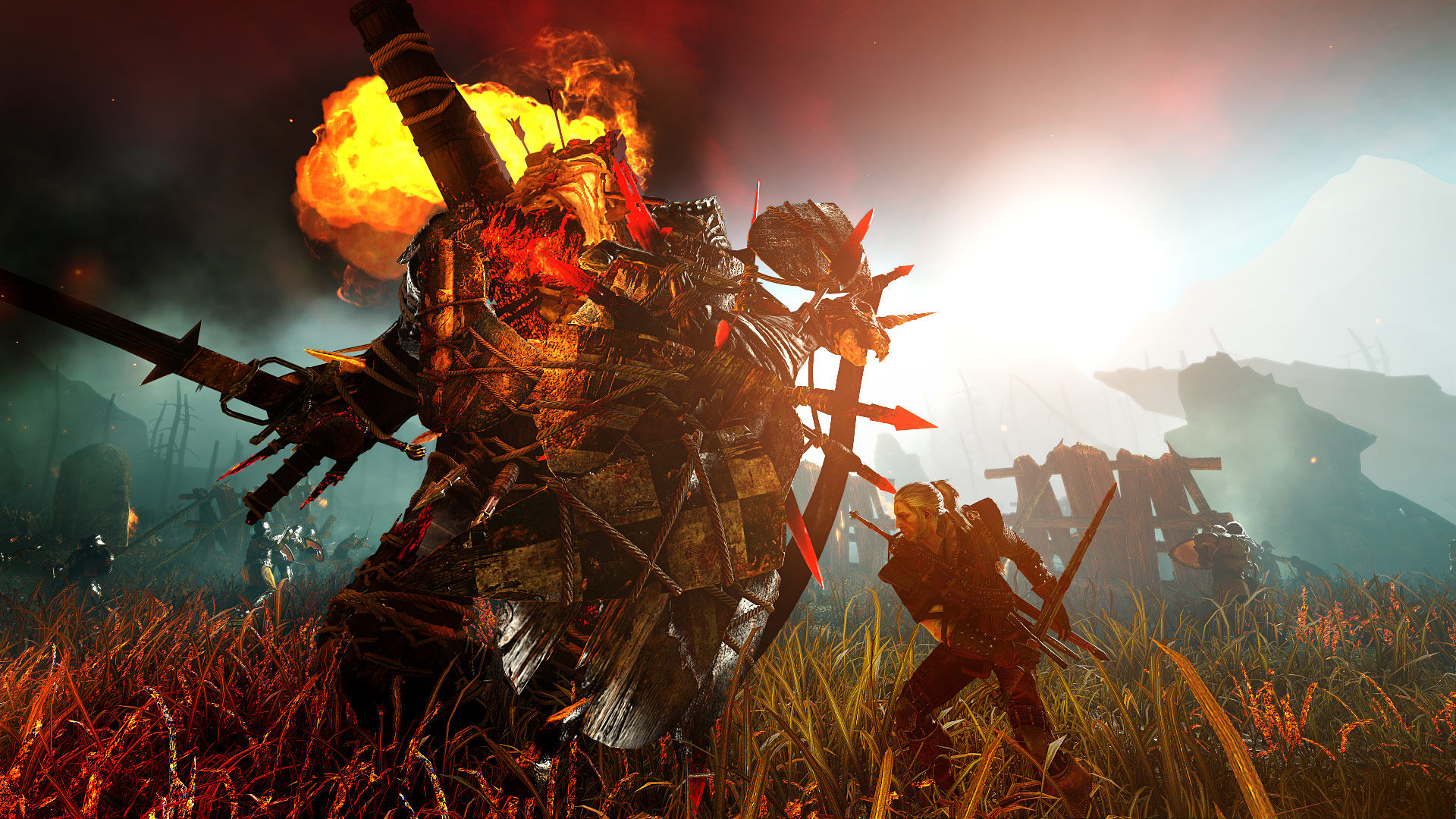
The Witcher 2: Assassins of Kings Enhanced Edition confidently hits its marks as a quality RPG title.
89
Verdict
90%
Steam
88
IGDB
Verdict score based on confidence-adjusted Steam reviews?
Very Positive on Steam (90% positive from 89K reviews)
Healthy player count of 806 concurrent
Critically acclaimed (88/100 critic average)
Compelling narrative and story
Steep difficulty curve may not appeal to casual players
The Witcher 2: Assassins of Kings is a 2011 action role-playing game developed by CD Projekt Red, based on The Witcher series of fantasy novels authored by Andrzej Sapkowski. It is a sequel to the 2007 game, The Witcher and the second main installment in The Witcher's video game series. It was released for Windows, Xbox 360, OS X, and Linux.
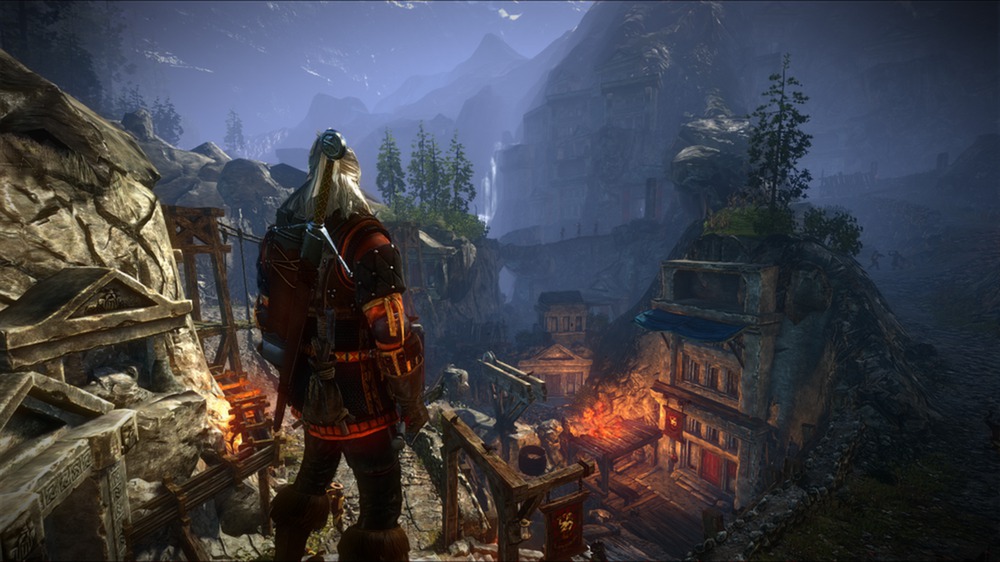
Runs well on modern hardware.
Updated 3h ago
The Witcher 2: Assassins of Kings: The Awkward Middle Child Regret: 26% (Geralt fighting in glue for the first 5 hours) Before Witcher 3 was a masterpiece, Witcher 2 was a very good game that nobody remembers. The story is strong and has real consequences, and the second act can look completely different depending on your choices. The combat, on the other hand, felt like Geralt was fighting in a swimming pool of glue, at least during the first hours. It's worth playing, if only to see where the legend began. And to hear about Roche's hat.
This was the first the Witcher game I played more than 15 years ago. I hadn't read the books yet and I still loved it so much that I bought all books and played W1 immediately after. Revisiting after so long after having played W3 multiple times, plus importing the W1 save, has been an amazing nostalgic journey. Such a good game with a great soundtrack and a massive step up from W1. You can clearly see the inspiration that would become the W3. If you haven't tried W1 and W2 yet but loved W3, please do, you will not regret it.
My least favorite Witcher game out of the mainline trilogy. An excellent story, albeit transitional and, as Dandelion describes it, “a preamble to an entirely new tale”, hampered by subpar combat, (mostly) weak side content, and highly restrictive level design that makes one feel boxed in for no discernible reason. Before completing The Witcher 2, I had the pleasure of playing through the entirety of The Witcher 1: Enhanced Edition, and by comparison, I would argue the first Witcher game has aged much better than this one. Sure, this one is more "modernized," but that comes at the cost of marginalizing most of the interesting mechanics present in the first game. For example, there are fewer potions overall than in the first game, and even less incentive to experiment with Alchemy. Once you find the ideal combination of potions, you'll rarely, if ever, find a need to change it based on the encounter at hand. A common sentiment is that the first Witcher game had "bad" combat or that it aged poorly. Yet I would hazard a guess that most people who say that didn't make it past the Outskirts of Vizima. In the first Witcher game, your investments in the skill tree, alchemy, and signs bear fruit in the latter half of the game. You can effectively wipe entire groups in the late game, and it is so satisfying. This “zero to hero” aspect also aligns with Geralt’s struggle with Amnesia, which makes narrative sense as well. Here? You'll be dodge-rolling and spamming Quen at the start of the game, and dodge-rolling and spamming Quen at the end of the game. This is especially the case at higher difficulties. I played the entire game on Dark and found the combat to be so utterly boring. Also, the introduction and reliance on QTEs here is terrible. One boss fight in the game is practically entirely contingent on QTEs. Throughout the fight, I kept asking myself, "What the ♥♥♥♥ did I do all that prep for?" This isn't new for CDPR, and this flaw shows up in their later games as well, like Cyberpunk. The set-piece they want to showcase overshadows the RPG elements present in their game. The best part of the gameplay actually involved the prep before you fought enemies. Combining potions, choosing weapon upgrades, and figuring out which skills complement your build is much more fun than the actual fighting. I would have much preferred a combat system akin to Dragon Age: Origins over the combat here. The best part of the game as a whole is its tightly knit story. Drawing heavy inspiration from [i]Time of Contempt[/i], my favorite novel from the books, the game thrusts the player into a campaign full of intriguing mysteries, politics, betrayal, and excellent characterization. Geralt feels like but one cog in a large and multi-layered machine. What I mean by this is that you could realistically make the central protagonist of this game any one of the main characters, and it would still be excellent. This doesn't mean Geralt isn't worthy of the spotlight. Instead, it speaks to the overall richness of the characters present in the story. What’s sacrificed at the stake here is the monster-hunting fantasy that I love so much from this franchise. Geralt has never felt less like a Witcher than in this game. Notice board contracts are nothing burgers, and the monsters here pale in comparison to the first Witcher game. They feel like obstacles to the meat and potatoes of the game; hurdles that rarely take center stage. To give an example, at one point I took a contract to slay the ill-named "Harpy Queen," only to find out I had accidentally slain the monster without even realizing it. One aspect I love about this game is its choices and consequences system. You could effectively complete the game by chasing the central antagonist without spilling their blood, and it still feels satisfying. On that note, one of the central choices you get to make in this game changes the entire second act and a significant portion of the last half. This part will also greatly shape your opinion on the game. Without spoiling much, I didn’t like the changes present from siding with Iorveth. I loved Iorveth, but his act created distance between me and the interesting political narrative that I was so invested in. I was shocked by how little importance was placed on his feud with the Blue Stripes. Instead, I was left collecting MacGuffins for a subplot I couldn't care less about to advance the narrative. Furthermore, the last act with Ioverth feels so out of place. You "infiltrate" a place and the guards are actually aggroed to you the entire time, yet somehow you can speak to NPCs and walk freely around the area as long as you're not directly in front of the guards. This aspect really took me out of the final act. Finally, I want to warn people about how buggy this game is. To even start the game, I have to always limit the game to 4 cores each and every time. A minor nuisance that I can get over, if that was the extent of my technical problems. I counted at least 10 crashes throughout my playthrough and had many more problems with saving. Make sure to turn off Steam Cloud BEFORE you play the game, as you'll run into many issues with it failing to save your progress. At one point, I had to replay a section over 5 times because the game refused to acknowledge that I had saved after getting through it. Overall, I found myself underwhelmed by The Witcher 2. I only recommend this game to people who are okay with weak gameplay but like a strong story, and to fans of the series in general. It's a game largely carried by its narrative, characters, and story. If those aspects are not enough to make you like a game, then I frankly think you're better off watching cutscenes on YouTube.
Reviews sourced from Steam. All reviews belong to their respective authors.
Data sourced from RAWG, Steam, IGDB, CheapShark, Wikipedia, HLTB, and GX Corner. Sources: rawg, steam, cheapshark, igdb, wikipedia.
All game titles, trademarks, and copyrights belong to their respective owners.
