A masterclass in action design, Thief II: The Metal Age delivers an unforgettable experience from start to finish.
92
Verdict
94%
Steam
90
IGDB
Verdict score based on confidence-adjusted Steam reviews?
Very Positive on Steam (94% positive from 2.1K reviews)
Critically acclaimed (90/100 critic average)
Compelling narrative and story
No significant drawbacks reported
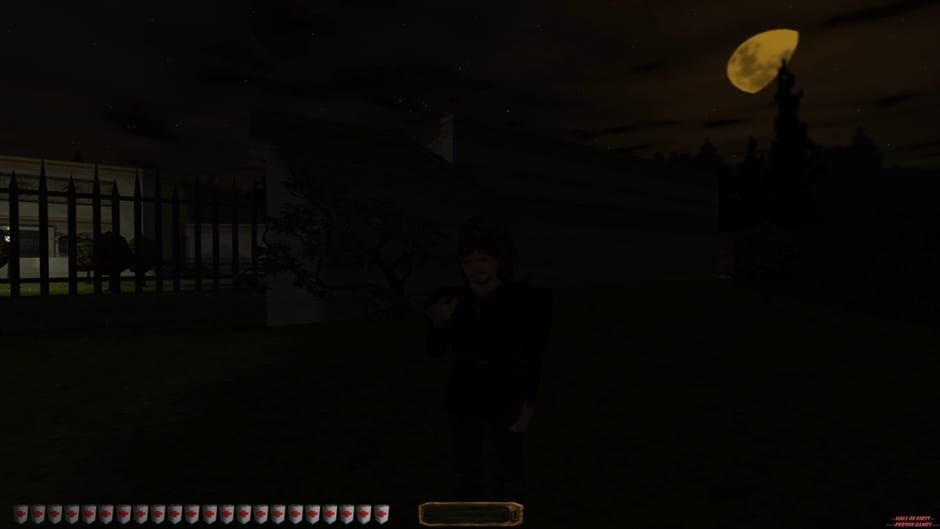
Thief II: The Metal Age is a 2000 stealth video game developed by Looking Glass Studios and published by Eidos Interactive in March 2000. Like its predecessor Thief: The Dark Project, the game follows Garrett, a master thief who works in and around a steampunk metropolis called the City. The player assumes the role of Garrett as he unravels a conspiracy related to a new religious sect. Garrett takes on missions such as burglaries and frameups, while trying to avoid detection by guards and automated security.

Runs well on modern hardware.
Last updated 7d ago
It's a very good game, although there is a noticeable drop in quality and fun in the last three missions. Some missions can be excessively dark, to the point of the gamma setting is useless. Still absolutely worth playing.
It’s Thief 1 but bigger and better, with most of the flaws of the original ironed out. Like the first game, Thief 2 struggles to run on modern systems and you will likely need the T2Fix patch to play it ([url=https://steamcommunity.com/sharedfiles/filedetails/?id=113169312]guide I used[/url]). Thief 2 retains the strengths of the first game. Here is a summary of what made Thief 1 so effective: - A rich stealth system based on sound, light levels, line of sight, movement speed, the surfaces you creep/walk/run on, whether you have a weapon drawn, and enemy alert levels (most stealth games are based on a small subset of these mechanics) - A large toolkit of arrow types, potions, and consumables that provide multiple approaches for overcoming obstacles and dispatching foes: for example, water arrows extinguish torches, moss arrows silence your footsteps, rope arrows allow you to climb to new heights, flash bombs briefly stun enemies, etc. - You are not a tank – enemies are tough and fighting them head-on is suicidal, so stealth and planning are essential for success - An excellent difficulty system where higher settings add side quests, higher loot requirements, and no kill rules that encourage full exploration of the mission and mastery over all challenges within it - Fantastic mission design featuring multiple paths to your goals, countless secrets to discover, plenty of treasure to steal, lots of verticality (you can even mantle up ledges + use rope arrows to reach upper areas), and rich environmental storytelling - A seductive dark fantasy + steampunk setting brought to life through rival factions with well-defined beliefs and pulpy fantasy-noir stories full of twists and turns to contextualize each mission - Legendary sound design with proper sound propagation that serves as your main way of detecting nearby enemies (and vice versa) - No modern conveniences like mini maps, quest markers, vision cones, peering around corners in third-person, icons above heads, or X-Ray vision Thief 2 sports many improvements over its already superb predecessor. The enemy AI has been polished; the in-game map is more detailed and marks rooms you have already visited; and almost all the undead enemies have been removed (good riddance to the zombie in particular – the first game had too many of them) and replaced with equally dangerous new Mechanist machines like the Watchers, combat bots, and turrets (analogous to security cameras, maintenance robots, and blast turrets from System Shock 2). There are more items to play around with such as scouting orbs for looking around corners or invisibility potions for bypassing that one area, and everything else in your toolkit seems more useful this time around – even the previously useless explosives like fire arrows and mines are slightly less useless this time thanks to the new Mechanist threats. The medieval aesthetic from Thief 1 has been swapped with an equally striking art deco theme, and the new OST is haunting and oppressive, perfectly conveying The City’s descent into a surveillance state. The best part about Thief 2 is the improved mission design – it was already incredible in Thief 1, but it is perfected here. Missions are larger and denser yet have even less wasted space; sneaking challenges are better designed; rooms are better decorated and furnished; there are way more secrets to find; and there are plenty more fun side-stories to read. Thief 2 features the best building interiors ever – for instance, First City Bank and Trust is replete with meeting rooms, vault rooms, office cubicles, a records library, and a statue hall. I hesitate to call Thief missions “levels”, they are much more than that… they are not just arbitrary hallways and rooms for the sake of content, but rather they are real, inhabited places with proper world-building, stories, characters, and history, offering glimpses into a far greater world. It is this attention to world-building that makes the Thief games so much more memorable and immersive. Special shoutout to Life of the Party, the best mission in the entire franchise and the mission this entire game was designed around – a legendary journey across the city rooftops ending at Angelwatch Tower, a 6-storey skyscraper hosting a party for the city’s nobility. This mission has some of the best “level”/mission design in any game ever, whether it is the varying heights of the rooftops or the glorious art deco halls of Angelwatch, and every corner is packed with loot, challenges, secrets, and side-stories. Memorable moments include the 4 guards arguing over Lady Van Vernon, the astronomer’s workshop, a wealthy bank you can rob, the Rothchilds (wow, how subtle) complaining they weren't invited to Karras’ party, the novice thief, the necromancer's spire, the greenhouse with the friendly spider... and that’s before reaching Angelwatch Tower. Sadly, Thief 2 keeps some faults from Thief 1. Shadows are still inconsistent – areas that look pitch black register as yellow on the light gem; enemies constantly get stuck on level geometries like ladders and railings; and climbing ladders and rope/vine arrows is still painful. Half the game is still running around 1-tapping everyone with the blackjack, and metal/ceramic are still the only surfaces you really need to worry about. Water arrows are even more OP – on top of extinguishing fires and cleaning blood stains, they can now shut down the new robots (and are by far the safest way to dispatch these enemies). There is evidence everywhere that Thief 2 is rushed: there is no tutorial to bring new players up to speed; some of the new enemies like the worker bot and mechanical cherub pose no threat; many factions from the first game such as the Hand Brotherhood are absent; and there are underdeveloped missions everywhere (more on this later). The story is weaker this time around (mostly because the devs built the missions first and scribbled a story piecing them together later) and the ending is abrupt and unsatisfying. Unfortunately, like the first game, Thief 2 has its share of underwhelming missions due to its rushed development cycle. The first disappointing mission is Ambush, where you must trek through a dull and mostly empty city with too many impassable gates. The next weak mission is Tracing the Courier, which reuses the map from Ambush and suffers from awful pacing. Another divisive mission is Kidnap, which recycles the Lost City from Thief 1 and has a time-consuming main objective. There is also the infamous pair of Casing The Joint + Masks, which take place in the same mansion and are blatant filler missions. [spoiler]The final mission, Sabotage at Soulforge, will make or break the game for you: on one hand, it is a highly ambitious and dramatic finale with an oppressive atmosphere that serves as the ultimate test of your sneaking abilities. On the other hand, it is way too long, you are massively undersupplied, there is 0 loot to steal, rooms are too large and empty, and there are unfinished areas everywhere. The signal rooms are rushed: they consist of a bunch of arbitrarily placed enemies and platforms with no environmental storytelling, and later rooms like the turret and conveyor belt rooms are badly designed. The devs should have split Soulforge into 2 missions and combined Casing the Joint + Masks into one.[/spoiler] Thief 2 may not be a perfect game due to many rushed missions and an unremarkable plot, but it is a perfect sequel that retains and builds upon the best elements of Thief 1. If you are deciding which of these two games to play, the correct answer is both – Thief 1 and 2 are must-play stealth titles even for those who do not like this genre. When you are done with the base game, there are a truly insane amount of Thief 2 fan missions (FM) to check out (the number of FMs for this title dwarfs the number of FMs for the other Thief games). 9/10, RIP Looking Glass Studios.
Hello, Friend! Tell me, did you, like me, decide to try these games after all the glowing reviews and retrospectives? If so, those commenters have deliberately misled you by omitting critical points: First, they last played Thief I and II 15-30 years ago. Their opinion of the game is based on nostalgia and memories of how great it was back then. If they tried it now, their opinion might change. Second, they call themselves stealth fans, but most likely, the Thief and Splinter Cell series are the only stealth games they've played and regularly replay. They haven't tried Hunt: Showdown, haven't played Hitman or Styx, haven't played Far Cry, Metro, Terminator Resistance, Assasin's Creed stealthily, haven't played any of the Commanderados-like games (Commandos + Desperados, Guerrillas 1941, Shadow Tactics, etc.), etc. In other words, their experience is limited to these two game series. They deliberately remain blind to the evolution and diversity of stealth mechanics, as well as the accompanying game structures and mechanics. Or they deliberately fail to compare modern and older implementations of mechanics, so they can continue to claim that Thief I and II are the best stealth games ever made, even today. If you try to criticize their sacred game, they'll resort to dirty manipulation: "You can't hold an old game to modern standards." Why not? If I, as a modern player, am strongly recommended to play this old game because it's a must-play classic, and they ask for money for it—we condemn piracy, after all—then it's perfectly logical that I'll hold it to modern standards. I paid the money, after all, right? I can overlook a game's shortcomings as a modern player, but only if it has something unique that's missing from more or less modern games. For example, despite the graphics and clunky controls, the early Tomb Raider games are still engaging, thanks to their rich acrobatics and puzzles with levels tailored to those acrobatics. But what about Thief I and II? They're woefully outdated and offer nothing unique to justify their shortcomings. In Thief I and II, stealth is all about staying silent and hiding in the shadows? Try Hunt: Showdown and Metro. Can you feel like a thief in Thief I and II? Your first playthrough definitely won't feel like a thief, but rather like a Far Cry character stealthily clearing a level. To truly feel like a thief, you need to memorize the level, but this isn't Hitman, which was designed to make replaying the same levels convenient and engaging. A video walkthrough will suffice. Now I'll list everything I didn't like about Thief I and II. No automap (auto-generated map) There's a level map in the "Mission Objectives" section, but it's always too general, abstract, and uninformative. I can understand such maps as an element of ambiance, immersion, and atmosphere. I can understand a blank automap at the start of a mission or on a first playthrough, but I can't understand its complete absence, even without a mod. Defenders justify the lack of an automap by saying it's neither diegetic nor immersive, and simply advise training your memory and memorizing the level. Memorize? A level? Where walls and passages are similar and easy to get lost and confused, and you can't place markers on walls? Cool... Also, for some reason, these same defenders aren't bothered by the completely non-diegetic and non-immersive stealth level HUD indicator, shaped like a pebble, right before their eyes. The Metro series also has a similar indicator, but at least it's ostensibly diegetic, located on Artyom's wrist. Optional loot is mandatory for mission completion. In addition to the mission's main item, you need to steal loot worth n amount to complete the mission. Imagine a shooter: imagine that to advance to the next level, in addition to killing all the enemies on the level, you must discover every secret, pick up every collectible, every bullet, and every first aid kit. Now imagine that the game allows you to replay a level, but you have to open and pick up everything anew each time. Verticality and Roleplaying as a Thief What do you expect from playing as a thief? Climbing walls, throwing a grappling hook, jumping across rooftops, breaking through windows, breaking through sewers, climbing beams under the ceiling—forget it. Most often, you'll only have access to the main entrance or, at worst, the back one around the corner. The ceilings are low here (it's surprising there wasn't a fire). - Graphics. Install the HD mod and it'll be fine. - Traps. We play as a thief – a master of infiltration and traps. It's perfectly reasonable to expect to be able to set and disarm traps like in Hitman or Deus Ex, right? No! There are almost no traps, and we can't disarm them. We have mines, but they're not available in every level and in a limited variety, and we also can't easily place them like in Hitman. - Light and Shadow. The HUD indicator for your stealth level is absolutely essential to the game because light and shadow are completely unintuitive: you're seemingly in the light, but invisible; you're seemingly in the shadows, but visible. - Flashlight. The game is pitch-black, you could poke your eye out, but the flashlight can only be obtained in the second mission of Thief 1; it's not available in the other missions. Immediately crank the brightness to maximum and consider yourself the owner of special night vision, acquired through training as a thief or a custodian. There's a lantern mod (https://www.moddb.com/mods/thief-lantern-mod/downloads/thief-lantern-mod), but it doesn't work with the HD mod. - Lights off. NPCs react to sound, but they don't react to lights being turned off right under their noses. - Torches. I'll go over there and put out that torch. I can't? Only with arrows? But I can go over there and put it out with Metro. - Shoes. Are we playing as a thief who hasn't even thought of wearing soft-soled boots?! - Lockpicks. Why are there two of them if they're not consumables, and therefore there won't be a situation where we can't open a chest because we don't have enough lockpicks? Immersive? Why only two then? Why not ten? We also play as an experienced, skilled, and renowned thief, but whose lockpicks can only open 10-20% of locks, not 80-90%. - Keys. Why is there no key holder, even though there was one in Ultima? - Cheats. There's only one built-in, working cheat: mission completion. The minimum set of cheats: immortality, invisibility, all equipment, all consumables, one hit = one kill/KO. - Intelligence. You can buy intelligence in the game, but its usefulness is questionable. If you're counting on buying the entire level map, then no. The second game has much better hints. - Rope arrows. In the first game, they're almost never needed, but in the second game, they're much better. - Guards in helmets. Oh! A guard in a helmet?! I suppose he can't be stunned from behind, and even if he could, the hit would make such a noise that everyone would come running? Oh, no... You can knock them out, no one will come running. - Equipment "shop." Saved equipment from the previous mission doesn't carry over to the next. The equipment available for purchase changes each time: there are missions where rope arrows, invisibility potions, and so on would be very useful, but they can't be purchased, only found in the level, even though they were available for purchase at the beginning of the previous mission. P.S. In the end, reading and watching about the game turned out to be more interesting than playing it. I hope the remake or reboot will be built along the lines of Hitman. P.S.S. I don't deny Thief's historical importance. But when a game is recommended to modern players as a truly outstanding stealth experience, rather than as a historical artifact, it inevitably begins to compete with modern games. And in this competition, many of its mechanics feel outdated, awkward, and limited.
Reviews sourced from Steam. All reviews belong to their respective authors.
Data sourced from RAWG, Steam, IGDB, CheapShark, Wikipedia, HLTB, and GX Corner. Sources: rawg, steam, cheapshark, igdb, wikipedia.
All game titles, trademarks, and copyrights belong to their respective owners.