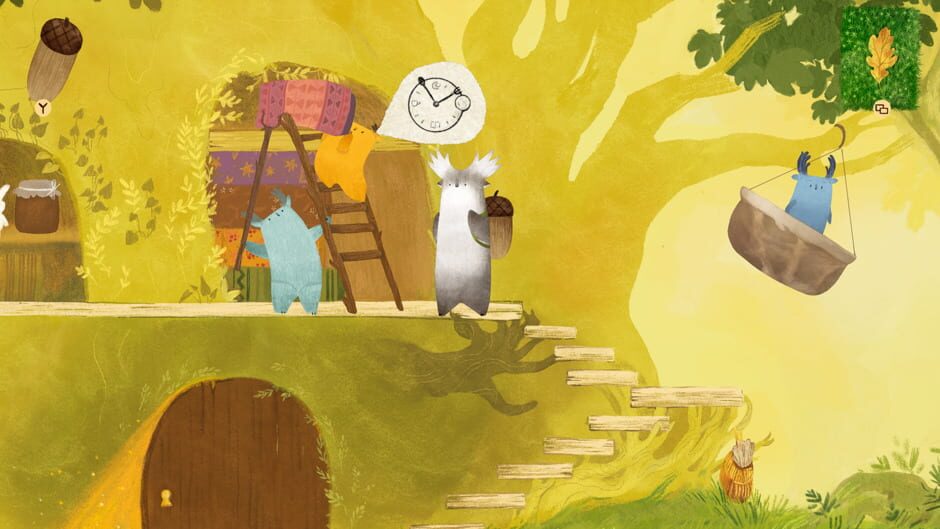
Tukoni stands out as one of the best Adventure/Casual titles in recent memory.
95
Verdict
97%
Steam
—
IGDB
Verdict score based on confidence-adjusted Steam reviews?
Overwhelmingly Positive on Steam (97% positive from 4K reviews)
Compelling narrative and story
Standout indie gem
Limited professional critic coverage
Autumn is a busy time in the forest, as animals wrap up their matters before taking a winter nap, and forest keepers Tukoni hustle to prepare pillows and blankets of various shapes and forms. As for the main character, he’s a Tukoni on a special mission.

Runs well on modern hardware.
Last updated 4d ago
A charming and relaxing experience with a calm atmosphere and simple, enjoyable gameplay. It doesn’t try to be complex, but it succeeds at creating a cozy and pleasant experience from start to finish.
Tukoni: Prologue, developed by Dream Operator and Oksana Bula and published by Dream Operator, is a gentle point-and-click adventure that feels more like an interactive storybook than a traditional game. Rooted in the whimsical world created by illustrator Oksana Bula, it invites players into a quiet forest inhabited by small, friendly spirits and creatures. Rather than focusing on conflict or high-stakes storytelling, the experience centers on simple acts of kindness and discovery, creating a tone that is calm, inviting, and emotionally warm from beginning to end. The gameplay is built around light environmental puzzles and exploration. Players take on the role of Tukoni, a small forest spirit who helps other creatures with everyday problems. Tasks involve gathering items, combining objects, and interacting with the environment in intuitive ways. The puzzles are deliberately straightforward, designed to be accessible rather than challenging, which makes the game easy to pick up regardless of experience level. Instead of testing logic or reflexes, the gameplay encourages observation and curiosity, rewarding players for paying attention to small details in the environment. One of the most distinctive aspects of Tukoni: Prologue is its wordless storytelling. There is no traditional dialogue, and the narrative unfolds entirely through animation, visual cues, and character interactions. This approach gives the game a universal quality, allowing players to understand its events and emotions without relying on language. The simplicity of the storytelling is one of its strengths, as it creates a sense of sincerity and warmth that resonates without the need for complex exposition. The focus remains on the feeling of helping others and being part of a living, breathing environment. The pacing of the game is intentionally slow and relaxed, encouraging players to take their time and absorb the atmosphere. There are no time limits or pressure to complete tasks quickly, which reinforces the overall sense of calm. Each interaction feels deliberate, and the progression unfolds naturally as players move through the forest. However, this relaxed pacing also highlights the game’s short duration. As a prologue, it serves more as an introduction to the world and its characters than a fully developed adventure, and it can be completed in a single sitting. Visually, the game stands out with its beautifully hand-drawn art style. The environments are rich with color and detail, capturing the charm of a children’s illustration while maintaining a sense of depth and cohesion. Every scene feels carefully crafted, with soft shapes and organic designs that bring the forest to life. Subtle animations, such as rustling leaves or gentle character movements, add to the immersion, making the world feel vibrant despite its simplicity. The visual presentation is complemented by a soothing soundtrack that enhances the tranquil atmosphere, creating an experience that is as relaxing to watch as it is to play. While the game excels in atmosphere and presentation, its simplicity may not appeal to all players. Those looking for more complex puzzles or extended gameplay may find it lacking in depth, as the mechanics remain consistent throughout and do not evolve significantly. Additionally, the short length means that the experience ends just as players become fully immersed in its world. Minor issues with interaction precision can occasionally interrupt the flow, though these moments are brief and do not significantly impact the overall enjoyment. Despite these limitations, Tukoni: Prologue succeeds in delivering a memorable and heartfelt experience that prioritizes emotion and artistry over traditional gameplay complexity. It offers a peaceful escape into a carefully crafted world where small actions carry meaning and every detail contributes to a sense of harmony. As an introduction to a larger universe, it leaves a strong impression and creates anticipation for what could come next. Rating: 8/10
This is a whimsical game about you helping other animals when you explore different parts of the map. Scavenge for mushrooms for squirrels, solve puzzles, and be enwrapped in this beloved game. Tukoni: Prologue, developed by Oksana Bula Studio, is a short, hand-crafted adventure experience that blends point-and-click puzzle design with a strong emphasis on atmosphere and visual storytelling. At first glance, it appears to be a simple, almost minimalist game, but it gradually reveals a carefully constructed world built around environmental interaction, gentle problem-solving, and a distinct artistic identity. Rather than focusing on challenge or progression in a traditional sense, it prioritizes mood, curiosity, and a sense of quiet discovery. The game places players in the role of a small forest spirit known as a Tukoni, guiding them through a series of interconnected natural environments. There is little in the way of explicit instruction; instead, the experience unfolds organically as players explore and interact with the world. Progression is tied to solving environmental puzzles, which often involve manipulating objects, understanding visual cues, and observing how different elements of the environment respond. This approach creates a natural flow, where learning is driven by experimentation rather than guidance. Gameplay is deliberately simple, relying on intuitive point-and-click mechanics. Objects can be examined, collected, and used in context, with puzzles designed to be approachable rather than demanding. The emphasis is on observation and logic rather than difficulty, making the experience accessible to a wide range of players. While the puzzles themselves are not complex, they are thoughtfully integrated into the environment, reinforcing the sense that the world is cohesive and alive. One of the defining aspects of Tukoni: Prologue is its visual presentation. The game features hand-drawn artwork inspired by nature, with soft colors and detailed illustrations that give each scene a storybook quality. The environments feel carefully composed, encouraging players to slow down and take in the details. Animation is subtle but effective, adding life to the world without overwhelming its calm tone. This artistic direction is central to the game’s appeal, often carrying the experience more than the gameplay itself. The audio design complements this approach, with gentle ambient sounds and minimalistic music that enhance the sense of immersion. Rather than drawing attention, the soundscape supports the visuals, reinforcing the tranquil atmosphere. Together, the visual and audio elements create a cohesive aesthetic that defines the overall experience. However, the game’s strengths are closely tied to its limitations. As a prologue, the experience is relatively short, often lasting less than an hour. This brevity means that while the world is engaging, it does not have the time to fully develop its ideas or introduce more complex mechanics. Additionally, players looking for challenging puzzles or deeper gameplay systems may find the experience too simple or limited in scope. Despite its short length, Tukoni: Prologue succeeds in establishing a clear identity and tone. It serves as an introduction to a larger concept, offering a glimpse into a world that emphasizes calm exploration and artistic expression over traditional gameplay structures. The lack of dialogue or explicit narrative also allows players to interpret the experience in their own way, adding a subtle layer of personal engagement. Ultimately, Tukoni: Prologue is best understood as a small, focused experience rather than a fully developed game. It offers a relaxing and visually distinctive journey that prioritizes atmosphere and accessibility. While it may not leave a lasting impact in terms of gameplay depth, it succeeds in creating a memorable and inviting world. In the end, it stands as a gentle and artistic introduction—one that highlights the potential of its concept while delivering a short but cohesive experience centered on exploration and visual storytelling. 7/10
Reviews sourced from Steam. All reviews belong to their respective authors.
Data sourced from RAWG, Steam, IGDB, CheapShark, Wikipedia, HLTB, and GX Corner. Sources: rawg, steam, igdb.
All game titles, trademarks, and copyrights belong to their respective owners.