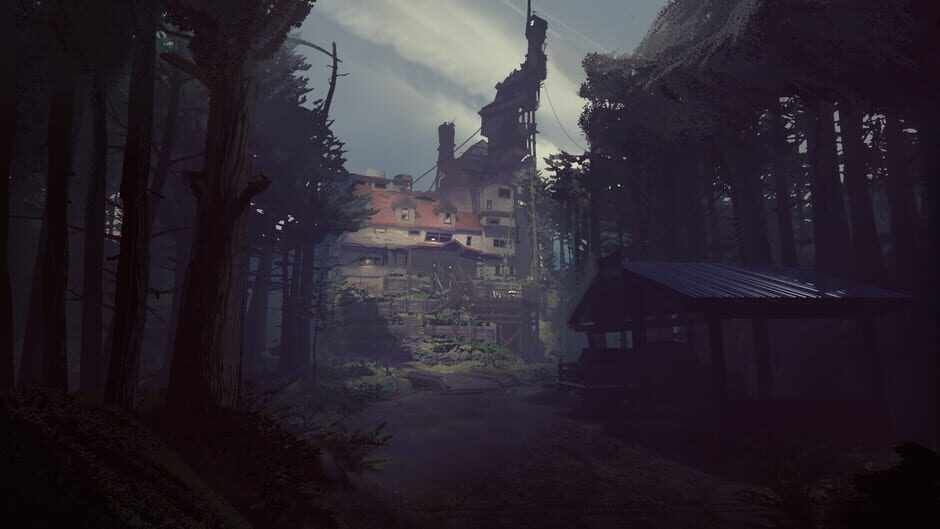
What Remains of Edith Finch stands out as one of the best Adventure/Indie titles in recent memory.
93
Verdict
96%
Steam
87
IGDB
Verdict score based on confidence-adjusted Steam reviews?
Overwhelmingly Positive on Steam (96% positive from 49K reviews)
Critically acclaimed (87/100 critic average)
Compelling narrative and story
Rich open world to explore
No significant drawbacks reported
What Remains of Edith Finch is a first-person exploration video game developed by Giant Sparrow and published by Annapurna Interactive. The game was released in 2017 for PlayStation 4, Windows, and Xbox One; for Nintendo Switch in 2019; for iOS in 2021; and for PlayStation 5 and Xbox Series X/S in 2022.
Runs well on modern hardware.
Last updated 19h ago
Short, beautiful, and unforgettable. I played it on a Win11 gaming laptop, a CachyOS gaming PC, and a Steam Deck, and it ran very well on all of them. The story is deeply emotional, the concept is interesting, and the atmosphere is so strong that the house itself feels alive. What impressed me most is how each section introduces a unique gameplay idea, so you never get bored, and the game doesn’t overstay its welcome. My only issues are the weird anti-aliasing implementation—lower settings look extremely blurry—and replayability isn’t very high once you know the story. Even so, this is one of those games I’d recommend to anyone who cares about narrative experiences. It’s short, but it leaves a lasting impression. Highly recommended.
The game is great. It took me 3h to finish it and i enjoyed every second of it. The story is mysterious and intersting, its quite emotional and the longer you play it, the sadder it gets. Gameplay is very much a hit or miss, depending on the person playing it. For the most part, it's like an interactive movie. You are learning the story, piece by piece, as you navigate your way through the finch house. The games story is divided into smaller stories that focus on members of the finch family individually. The cool thing is that every story has slightly different game mechanics, almost like a little mini game you have to do while you're learning about what happened to that person. Now, some people really dislike walking sims, and this game is not for them. This game is for people who appriceate a good story even if it lacks in some other aspects. The game is also surprinsingly beautiful. I always knew the story is great as it is the main thing the game is praised for but the visuals are almost equally as good. For this kind of game, those two things are arguably the most important because they deliver an incredible experinece. All in all, i strongly recommend it. The gameplay can be a bit boring, but incredible story and visuals make up for it. Might even be the greatest game of its kind. Edit: If i could also recommend checking out the game theory video they did on this game. It is an interesting take on the story and a bit more dark than what we see in the game. Just, please, play the game first and try not to spoil it for yourself.
It's fine. Unique, experimental. I did not find it terribly coherent or inspiring in any particular direction as an audience member, but I can see why it is hailed as an innovative use of the medium.
Reviews sourced from Steam. All reviews belong to their respective authors.
Data sourced from RAWG, Steam, IGDB, CheapShark, Wikipedia, HLTB, and GX Corner. Sources: rawg, steam, cheapshark, igdb, wikipedia.
All game titles, trademarks, and copyrights belong to their respective owners.
